If you've typed "voodoo love spell faq" into Google, you're probably not looking for a marketing page. You want straight answers. Does this actually work. Is it dangerous. How much does it cost. Can someone be forced to love you. Is the guy on the other end of WhatsApp even real.
Contact me by WhatsappFair questions, all of them. I've spent years answering versions of these same questions from people writing in at two in the morning, heartbroken, skeptical, sometimes both at once. This page collects the real ones, the ones that come up again and again, and answers them the way I'd answer them in a message, not the way a brochure would.
A quick note before we start: I'm writing this from the perspective built around Priest Codanto's practice, a lineage of Vodun rooted in Ketou, Benin, going back to 1980. Some answers here reflect his specific approach. Other voodoo practitioners may do things differently, and hoodoo, which gets confused with voodoo constantly, is its own separate tradition with its own history. We'll get to that distinction too.
This voodoo love spell FAQ is organized the way people actually ask, moving from the basics through safety, process, comparisons, and what happens after a ritual is done. If you only read one section, skim the headers below and jump to whichever one matches what's keeping you up at night. That's genuinely the point of building a voodoo love spell FAQ instead of a single wall of marketing copy: you should be able to find your specific worry and get a direct answer, not sift through fluff to get there.
The Basics
Why does this voodoo love spell FAQ exist in the first place?
Because most of what's written about this topic online falls into one of two extremes. One extreme is glossy sales copy promising guaranteed results in 24 hours, no questions asked. The other is skeptical debunking that treats the entire tradition as nonsense without ever engaging with what Vodun actually is. Neither extreme answers the actual questions a person typing "voodoo love spell faq" into a search bar is carrying: is this real, is it safe, will it work for my specific situation, how do I avoid getting scammed. This page tries to sit in the middle and answer honestly, including the parts where the honest answer is "it depends."
What exactly is a voodoo love spell?
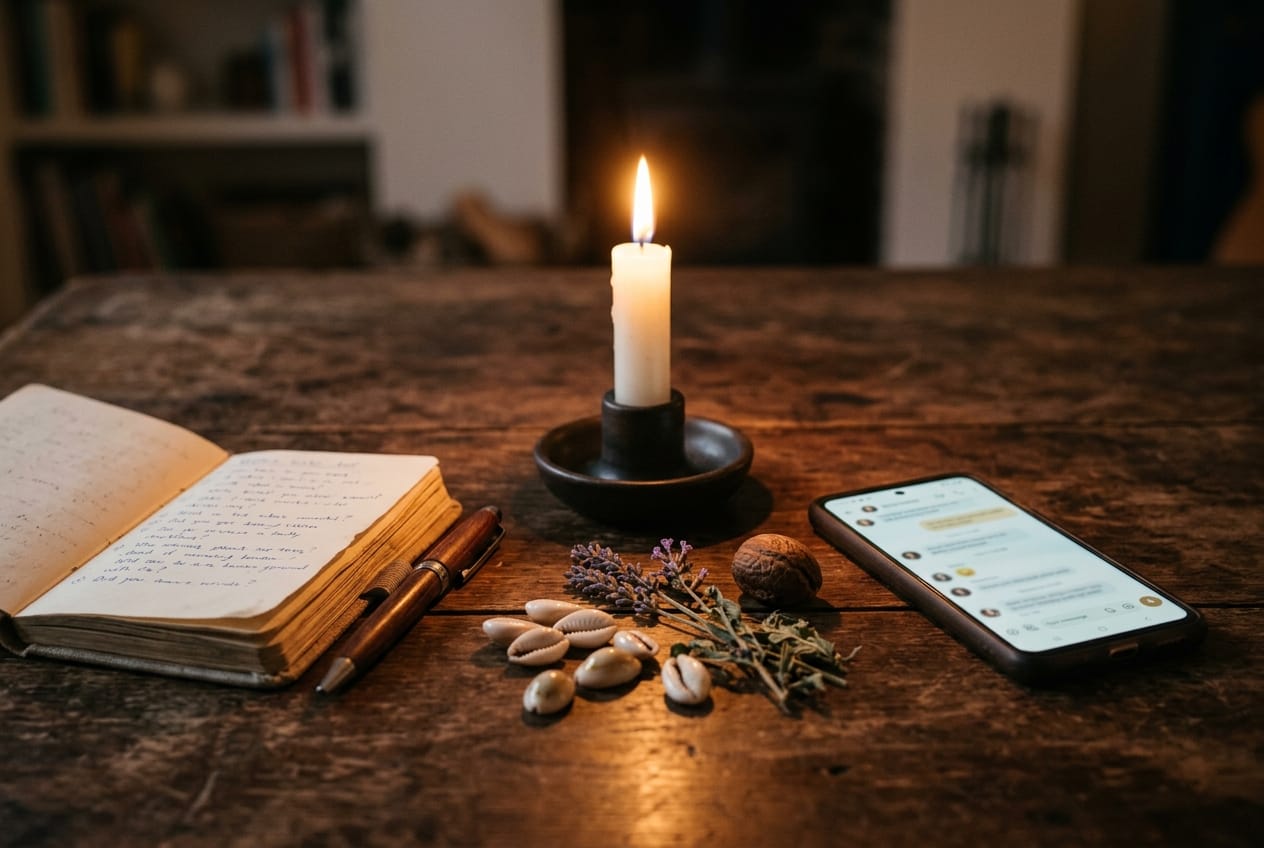
At its core, a voodoo love spell is a ritual intended to influence romantic circumstances. It might rekindle a fading connection, draw someone's attention back toward you, strengthen a bond that's already there but wobbling, or clear away whatever's blocking love from reaching you in the first place. The methods vary. Some rituals use a small doll representing the person, tied to focus intention. Others use a photograph, herbs like verbena or lavender, candles, or objects tied to Vodun cosmology like kola nuts and certain amulets.
What ties it together isn't the specific object. It's the framework. Vodun treats the world as populated by spirits, called loa in the language most people recognize, who can be petitioned, honored, and asked to intervene in specific, bounded ways. A love spell, in this context, is a structured request made through that framework, not a vague wish tossed into the universe.
How is a voodoo love spell different from a "regular" love spell?
Depends what you mean by regular. If you mean something you'd find in a generic spell book with no attached tradition, light a candle, say a rhyme, wait, then the difference is lineage. A voodoo love spell sits inside a specific cosmological structure, with its own spirits, its own etiquette for approaching them, and its own consequences for doing it wrong. It's not freeform.
If you mean Wiccan spellwork specifically, the difference runs deeper. Wicca is a modern religious movement, formalized in the 20th century in England, drawing on earlier folk magic and ceremonial traditions. Vodun predates it by centuries and developed independently in West Africa, later carried to Haiti and Louisiana through the slave trade, where it mixed with Catholicism and local practices to produce distinct offshoots. Different origin, different spirit pantheon, different internal logic for what a ritual is even doing.
Do voodoo love spells actually work?
I'm not going to give you a yes that erases the question, because the honest answer has more texture than that. Rituals aren't a vending machine where you insert a request and receive a guaranteed outcome. What Priest Codanto has told me, more than once, is that a ritual works with what's already there. If there's a real emotional thread between two people that's been buried under miscommunication, distance, or stubbornness, a ritual can help surface it and clear the noise around it. If there was never anything there to begin with, no ritual manufactures feeling out of nothing.
That's not a hedge. It's the actual mechanism as he describes it. People who come in expecting a switch to be flipped on someone who's never shown interest tend to leave disappointed, and honestly, he'll tell them that upfront rather than take the booking and let them find out later.
Is voodoo real, or is it just superstition?
That's less a factual question than a worldview question, and I'd rather be straight with you than pretend there's a settled scientific answer. Vodun is a living religion practiced by millions of people across Benin, Togo, Nigeria, and the diaspora. It's recognized as an official religion in Benin, with its own holidays and public ceremonies. Whether the mechanisms behind a ritual are literally spiritual, psychological, or some blend the two haven't fully separated yet is something reasonable people disagree on. What isn't up for debate is that it's a real, structured, centuries-old tradition, not something invented for a website.
Where does voodoo actually come from?
West Africa, specifically the region spanning modern Benin, Togo, and parts of Nigeria, where Vodun (the root word "voodoo" descends from) developed as an indigenous religious system with its own priesthood, its own spirits, and its own rites long before European contact. Priest Codanto's own lineage traces to Ketou, a town in Benin with a deep Vodun history, and he's practiced there since 1980, trained under older sages the way the tradition has always passed knowledge down, not from a manual, but from teacher to student over years.
The version most Americans have heard of, dolls with pins, zombies, curses whispered in New Orleans, is a heavily distorted, Hollywood-flavored offshoot filtered through Louisiana Voodoo and decades of horror movies. It bears about as much resemblance to the actual practice as a haunted house attraction bears to a real funeral.
Why do so many voodoo love spell FAQ pages give conflicting answers?
Because the industry around this topic is genuinely a mixed bag. Some sites are run by people with real lineage and real training. Others are content mills churning out generic spell copy with no connection to any actual tradition, sometimes copying each other's text word for word. When you read five different FAQ pages and get five different answers about cost, timeline, or process, that's not because the tradition itself is inconsistent. It's because you're reading a mix of legitimate practitioners and opportunists dressed up in the same aesthetic. Part of the reason to lean on a detailed voodoo love spell FAQ like this one is to get answers grounded in an actual, named, traceable practice rather than a template.
Is there a difference between "voodoo," "Vodun," and "Vudu"?
Mostly spelling and regional variation rather than substance. Vodun is the term used in Benin and the broader West African context, and it's the spelling closest to the original Fon-language root. Vodou is common in Haitian contexts. Voodoo is the anglicized spelling that took hold in the United States, partly through Louisiana and partly through decades of media reference, and it's often the loosest of the three in terms of what people assume it means. When this page uses "voodoo," it's referring to the West African tradition and its diaspora offshoots, not the Hollywood shorthand.
Safety and Ethics
Are voodoo love spells dangerous?
Physically, no. Nobody's handling anything hazardous. The ingredients involved are things like herbs, candles, kola nuts, small handmade dolls, amulets. Nothing toxic, nothing illegal, nothing that resembles the blood sacrifice imagery movies love to lean on.
The more interesting question is whether they're spiritually or emotionally risky, and here I'll be honest: intention matters. A ritual approached with clear, grounded intent tends to unfold differently than one approached out of desperation or spite. Priest Codanto asks about the situation first, not as a formality, but because the shape of the ritual and the way it's approached depends on what's actually going on between two people.
Can a voodoo love spell force someone to fall in love with me?
No, and anyone who tells you otherwise is selling you something they can't deliver. This is the single most important ethical line in the whole practice. A ritual can clear obstacles, strengthen an existing bond, or help someone reconsider feelings that are already present but suppressed. It doesn't override another person's will and manufacture love where none exists. Think of it less like mind control and more like removing static from a signal that was already there.
Is it wrong to cast a spell on someone without their knowledge?
This one gets debated even within the practice itself, so I won't pretend there's a single tidy answer. Some practitioners see it as no different from praying for someone's wellbeing without asking permission first. Others draw a harder line around anything targeting a specific person's romantic feelings, knowledge or not. Priest Codanto's approach leans toward the first camp, provided the intention is genuinely about restoring or strengthening a real connection rather than manipulating someone against their nature, which loops back to the same point above: the ritual works with what's real, not against it.
Does voodoo involve animal or human sacrifice?
For love work specifically, no. This is one of the biggest myths the movies planted and never bothered uprooting. What's actually used are things like herbs, kola nuts, candles, and small handmade amulets, objects with symbolic and ritual weight, not blood offerings. Sacrifice does exist in some Vodun ceremonial contexts, historically and in specific rites tied to particular spirits, but it has nothing to do with a love ritual, and it's not something practiced through remote consultations regardless.
Can a voodoo spell be reversed?
Generally, yes, though it depends on what was done and why. If a ritual was cast with harmful intent, and to be clear, that's not the kind of work described on this page, countering it is its own separate process, often more involved than the original spell. For love work specifically, since the aim is restoration rather than harm, there's rarely a need for reversal in the way people imagine. More often, if something isn't landing as expected, the follow-up is adjustment rather than undoing.
What happens if a spell is done for the wrong reasons?
Priest Codanto's view, which he's repeated to more than one client who came in with revenge on their mind instead of love, is that intention shapes outcome. A ritual approached with bitterness, control, or spite as the underlying motive tends to produce murkier, less stable results than one approached with genuine desire for connection and healing. It's less a cosmic punishment and more a simple fact about how these rituals function: they amplify and clarify what's already present, including the intention behind them.
How the Process Actually Works
How long does it take to see results?
For straightforward situations, reconnecting with someone after a fight, for instance, signs often start showing within one to three weeks. More layered situations, ones involving longer separations, third parties, or deeper resentment, can take a month or more to fully unfold. Anyone promising results within 24 hours across the board is either inexperienced or not being straight with you.
What materials are used in a voodoo love spell?
It varies by situation, but common elements include a small doll representing one or both people involved, red headed pins used with intention rather than harm, candles, herbs such as lavender and verbena, kola nuts, and specific amulets tied to Vodun practice. Photographs are sometimes used in place of or alongside a doll, depending on the ritual.
Do I need a real priest, or can I do this myself?
You can absolutely find DIY rituals online using candles and basic materials, and some people do get something out of them, mostly a sense of intention and ceremony, which isn't nothing. But the deeper structural work, the kind that draws on specific spirits, follows a lineage trained sequence, and adjusts based on the actual details of a situation, isn't something you pick up from a blog post. It took Priest Codanto years of study under established sages before he was doing this work independently. That's not gatekeeping for its own sake; it's just what the tradition actually requires.
What information does a priest need from me to start?
Typically your name, a photograph if you have one, and an honest description of the situation: how it started, where it stands now, and what you're hoping to see change. The honesty part matters more than people expect. Vague or half true accounts make it harder to shape a ritual that actually fits what's going on.
How much does a voodoo love spell cost?
There's no single fixed price, because every situation calls for a different combination of materials and a different amount of ritual work. What's reasonable is discussing your situation first and getting a clear sense of the process and cost before anything is agreed to, not being quoted a number before anyone's even heard what's going on, and definitely not being asked to keep paying more as things "progress," which is a pattern worth watching for (more on that below).
What's the difference between a voodoo doll and a curse?
This is probably the single biggest misconception out there, so it's worth spelling out clearly. A voodoo doll, in actual practice, is a focusing tool: a physical representation used to direct intention toward a specific person, most often for healing, protection, or in this context, love. A curse is a deliberate act intended to cause harm. The doll itself is neutral; it's the intention behind its use that determines what it's for. Pop culture collapsed these into one image, pins jabbed into a doll to cause pain, and that image alone has done more to misrepresent the tradition than almost anything else.
Can a voodoo love spell bring back an ex?
Sometimes, and it depends heavily on why things ended in the first place. If the relationship broke down over something surface level, pride, timing, a misunderstanding that spiraled, there's often real room to work with. If it ended because of something more fundamental, incompatibility, repeated harm, one person having genuinely moved on, a ritual isn't going to manufacture a foundation that wasn't there. This is the same principle from earlier, just applied to exes specifically: the work restores what's real, it doesn't invent what isn't.
Does distance matter? Do I need to be in Benin?
No. Most clients today are in the United States, Canada, and Europe, and consultations happen entirely through WhatsApp, phone, or email. The ritual itself is performed on the practitioner's end, in Ketou, so physical distance between you and the person doing the work isn't an obstacle to how it functions.
What does a typical love ritual actually look like, step by step?
Every ritual is shaped around the specific situation, so there's no single universal script, but a common structure for a straightforward reconnection ritual runs roughly like this. First, Priest Codanto gathers the full picture: names, a photo if available, how things stood before the falling out, what's changed since. Second, he selects the materials suited to that specific case, often a small doll or photograph to represent the person, paired with herbs like lavender for opening emotional receptiveness or verbena for clearing lingering resentment, alongside candles chosen for color and intention. Third, the ritual itself is performed on a day and time considered favorable for the spirits being petitioned, which isn't arbitrary since certain days carry more weight for certain kinds of requests within Vodun cosmology. Fourth, he lets you know it's been done and gives you a realistic window for when signs might start appearing, along with what those signs typically look like so you're not left guessing. It's a process, not a single dramatic moment, and most of the actual "magic," if you want to call it that, is in getting each of these steps right rather than any one flashy gesture.
Why do some rituals take longer than others?
Complexity, mostly. A situation where two people had a recent argument and just need a nudge back toward each other is a fundamentally simpler read than one involving years of built up resentment, a third party in the picture, or geographic and cultural distance layered on top of emotional distance. More variables means more careful, layered ritual work, and layered work takes longer to unfold and to observe results from. It's the same reason a small home repair takes an afternoon while a renovation takes months. The underlying principles are related, but scale changes everything.
Is there a "starter" ritual for someone who's never done this before?
Sometimes a smaller first step makes sense, a simpler ritual aimed at clarity rather than a full reconnection working, especially when someone's still deciding whether they even want the person back or just want to stop hurting over the situation. That distinction matters more than people expect walking in. A good practitioner will help you figure out which one you're actually asking for before diving into the bigger ritual.
Understanding the Tradition Behind the Ritual
A lot of what makes this voodoo love spell FAQ different from a generic listicle is context, actually understanding where these practices sit inside a living religious tradition, rather than treating them as isolated party tricks disconnected from anything real.
What role do spirits play in a voodoo love spell?
In Vodun cosmology, spirits, often called loa or vodun depending on the regional term, act as intermediaries between the human world and a distant, less directly accessible supreme creator. Different spirits are associated with different domains: some with water, some with iron and warfare, some with love, fertility, and the bonds between people. A love ritual typically involves petitioning the spirit or spirits associated with that domain, following a specific, learned protocol for how that petition is made: the right offerings, the right timing, the right words. It's less like casting a spell from a fantasy novel and more like a formal, respectful request made through an established channel, the way you might go through proper procedure to get an answer from an institution rather than shouting into the void and hoping.
Why does the practitioner's training matter so much?
Because the protocol isn't written down in a single accessible book anywhere. It's passed from teacher to student over years of direct instruction, observation, and practice. Priest Codanto studied under established sages in Ketou before working independently, absorbing not just which herbs pair with which intention but the subtler judgment calls: how to read a situation, when a ritual needs adjusting mid process, when someone's account of their situation doesn't add up and needs gentler follow up questions. That kind of judgment doesn't come from a weekend course or a PDF. It's part of why a real voodoo love spell FAQ keeps circling back to lineage and training instead of just listing ingredients. The ingredients are the easy part.
Are there rituals a person should never attempt without a trained priest?
Generally, anything beyond the simplest candle and intention style rituals benefits from experienced guidance, mostly because of how easy it is to misread your own situation when you're emotionally invested in the outcome. It's the same reason doctors don't operate on themselves and lawyers don't represent themselves in their own messy divorce. Proximity to the problem clouds judgment. A trained practitioner brings distance and pattern recognition from having seen hundreds of similar situations play out, which is hard to replicate alone with a candle and a wish at midnight.
How does someone actually become a voodoo priest?
It's not a title anyone can claim after reading enough books online. Traditionally, it involves years of apprenticeship under an established priest, learning the specific rites, the relevant spirit relationships, the herbal and ritual knowledge, and, just as importantly, the ethical framework governing how and when to use it. Priest Codanto's own path started in Ketou and unfolded over years before he was recognized as capable of doing this work on his own terms, which is a very different picture than the instant "spiritual advisor" certificates some corners of the internet hand out.
Does the tradition have anything to say about consent and free will more broadly?
Yes, and it's more thoughtful than people expect going in. The idea that a ritual works with existing feeling rather than overriding someone's will isn't a marketing soft pedal invented for skeptical Western audiences. It reflects an actual ethical position within the practice about the limits of what any ritual should attempt. Free will isn't treated as something to be steamrolled; it's treated as the very thing a ritual has to work alongside, which is precisely why the earlier answer about forcing someone to fall in love is a flat no rather than a hedge.
Finding a Real Practitioner
How do I know if someone claiming to do this is legitimate?
A few markers tend to separate genuine practitioners from opportunists. A real one will talk about a specific lineage or tradition rather than vague "ancient powers." They'll explain the process before asking for payment, not after. They'll give you a realistic timeline instead of an instant guarantee. And they'll actually answer direct questions instead of deflecting into mystique. If you want a deeper breakdown of this, there's a full guide on this site walking through exactly how to vet a real voodoo priest step by step.
What are the warning signs of a fake spell caster?
Watch for guaranteed results within an impossibly short window, pressure to pay immediately before any real conversation about your situation, costs that keep climbing once you're already invested ("the spirits are asking for more" is a phrase that should set off alarms), biographies that read like they were copied from ten other sites with the name swapped out, and payment requests routed through untraceable methods with no way to follow up if something goes wrong.
Warning signs of a fake spell caster
- Guaranteed results within an impossibly short window
- Pressure to pay before any real conversation about your situation
- Costs that keep climbing once you're invested ("the spirits are asking for more")
- Biographies copied from ten other sites with the name swapped out
- Untraceable payment methods with no way to follow up
Can I trust the testimonials I see on voodoo spell sites?
Healthy skepticism is warranted, and I'll say this plainly rather than dodge it: some testimonials across this industry, including illustrative ones used on sites like this one, are written to represent common experiences rather than being pulled from verified, name attached clients. That's an industry wide reality worth knowing before you take any testimonial at face value anywhere, not just here. What's more reliable than a testimonial is how a practitioner talks to you directly: the specificity of their questions, the clarity of their explanation, whether they're rushing you toward payment or actually listening.
Does Priest Codanto personally perform this work?
Yes. He's practiced Vodun from Ketou, Benin since 1980, trained under established sages before working independently, and handles consultations directly rather than through a call center or a team of anonymous writers. You can reach him directly through WhatsApp at +229 56 94 95 65. Read more about Priest Codanto.
Is it safe to send photos or personal information online for this kind of work?
Reasonable caution is smart with any online exchange, spell related or not. A legitimate practitioner will explain why a piece of information is useful to the ritual rather than just demanding it, and won't push you to hand over anything beyond what's actually needed: a name, maybe a photo, an honest account of the situation. If someone's asking for financial details, passwords, or anything unrelated to the actual ritual, that's your signal to stop.
What should I actually say in a first message to a practitioner?
Keep it simple and honest rather than overthinking the wording. Something like your name, a brief description of the situation, how long you've been dealing with it, what's changed recently, what you're hoping for, is plenty to start a real conversation. You don't need to write an essay or use any special phrasing to be taken seriously. A practitioner who's actually paying attention will ask the follow up questions that matter rather than expecting you to guess at some secret script. Priest Codanto's WhatsApp line, +229 56 94 95 65, is set up for exactly this kind of first message.
How do response times usually work once I reach out?
It varies with time zones and how busy things are on a given day, but a reasonable expectation is a response within the same day for an initial message, sometimes faster. If a "practitioner" goes silent for days after taking payment, or only responds when pushed for more money, that's a pattern worth paying attention to. It's one of the clearer signs something's off, separate from the general warning signs already covered above.
Does gender or age matter for whether this kind of work applies to my situation?
No. The underlying framework, working with real feeling that's already present, clearing obstacles, strengthening a genuine bond, doesn't shift based on who's asking or how old they are. What changes case to case is the specific shape of the situation, not who's bringing it.
Questions About Specific Situations
This part of the voodoo love spell FAQ covers the situations people write in about most often, the ones that don't fit neatly into a general answer because the details change everything.
What if the person I want back lives far away, in another country?
Distance between you and the person you're hoping to reconnect with doesn't change how the ritual functions, the same way distance between you and Priest Codanto doesn't. What matters more is the actual state of the relationship: how it ended, how much contact still exists, whether there's a real emotional thread left to work with. Someone three thousand miles away who still texts you at 1am when they can't sleep is a very different situation than someone in the next town who's gone completely silent.
Can a voodoo love spell help if the person I want is already married or in another relationship?
This is one of the more ethically loaded questions that comes up, and it deserves a straight answer rather than a dodge. Priest Codanto's stance is that a ritual won't manufacture desire that isn't there and won't dissolve a genuine, functioning bond someone else has built. What it can do is bring clarity, sometimes to you about whether pursuing this is actually wise, sometimes to the other person about feelings they've been suppressing or a relationship they've stayed in out of habit rather than love. It's not a tool for breaking up a happy household, and anyone promising that outcome specifically is overselling what this work does.
Is there a version of this for people trying to save a marriage rather than start a new relationship?
Yes, and honestly this is one of the more common requests, not the exception. Marriages under strain from years of resentment, a betrayal that hasn't been processed, or two people who've simply drifted respond to a different kind of ritual work than a fresh romantic pursuit, often something aimed at restoring communication and softening built up defensiveness rather than sparking new attraction. The materials and structure shift accordingly.
What about love triangles or situations involving a third person?
These are some of the trickiest cases because there are more variables and more people's genuine feelings involved. A ritual here tends to focus on clarifying your own situation and strengthening what's real between you and the person you actually want, rather than targeting the third party directly, which edges toward manipulation rather than restoration. Priest Codanto will usually ask more detailed questions in these cases specifically because getting the read wrong matters more when three people's feelings are tangled together.
Does this work the same way for same sex couples?
Yes. The underlying mechanics, working with what's genuinely present between two people, clearing obstacles, strengthening connection, don't change based on the gender of the people involved. Vodun as a tradition isn't built around a narrow, heteronormative template of romance; it's built around intention and relationship, full stop.
I've already tried a ritual once and it didn't work. Should I try again?
Sometimes, but it's worth having an honest conversation first about why the first attempt didn't land before jumping straight to round two. Occasionally the situation has genuinely shifted since the first ritual, new information, a new obstacle, more time passed, and a second attempt makes sense. Other times the first read of the situation was incomplete, and repeating the same ritual without adjusting anything just repeats the same result. This is a good moment to reach back out and talk it through rather than guessing on your own.
Comparisons People Often Ask About
What's the difference between voodoo love spells and hoodoo love spells?
Short version: different tradition entirely. Hoodoo developed in the American South, blending African folk practices, European folk magic, and Native American plant knowledge into something distinct from Vodun, without hoodoo's structured spirit pantheon. There's a full comparison covering this in detail, the materials, the different rituals, where the two traditions overlap and where they genuinely diverge, worth reading if you're trying to decide which approach fits what you're looking for.
Is voodoo the same thing as black magic?
No, and this is another myth pop culture is largely responsible for. Vodun is a full religious system with its own moral structure, its own spirits associated with healing, protection, fertility, and guidance, not an inherently dark or malevolent practice. Like most traditions, it can be misused by individuals with harmful intent, but that's true of prayer in any religion. Misuse doesn't define the whole system.
How does a voodoo love spell compare to a Wiccan love spell?
They come from entirely different lineages. Wicca is a 20th century religious movement built around a specific set of rites, a nature centered cosmology, and its own ethical framework (the Wiccan Rede, if you've heard of it). Vodun predates it by centuries, developed independently in West Africa, and works through a distinct spirit pantheon rather than Wicca's more nature and deity focused approach. Neither is "more magic" than the other; they're just structurally different systems with different histories.
Is one tradition "stronger" than the others?
Priest Codanto has a line he uses for this exact question: a knife isn't stronger than a needle, they're just built for different jobs. Comparing traditions by "strength" misses the point of what each one actually is. What matters more than which label is on the practice is whether the person doing the work actually knows what they're doing, and whether the situation you're bringing them is one that has real room to shift.
More Questions From This Voodoo Love Spell FAQ Worth Covering
A handful of questions don't fit neatly under the categories above but come up often enough to deserve their own space here.
Can a voodoo love spell help with a first time crush, not just an existing relationship?
Yes, though the framing shifts slightly. With an existing relationship or a recent ex, there's history to work with: shared experience, prior emotional investment, a known pattern between two people. With someone who barely knows you exist, the honest starting point is different. A ritual can help clear your own path toward being noticed, being more confident in approaching them, and creating openings for genuine connection to form, but it still can't manufacture feeling in someone who has no context for who you are yet. Priest Codanto is upfront about this distinction because it changes what a realistic outcome looks like.
What if I don't know exactly what I want? I just know something feels wrong in my love life.
That's a completely valid place to start from, and probably more common than people assume. Not every consultation begins with a crystal clear request like "bring back my ex by name." Sometimes it starts as "I keep attracting the same kind of person and I don't know why" or "something feels blocked and I can't name it." Priest Codanto works through that kind of vague unease the same way he works through a specific breakup, by asking questions, listening for patterns, and figuring out where the actual work needs to happen before any ritual gets designed.
Is there a difference between a love spell and a protection spell for a relationship?
Yes, and they're often used together rather than as substitutes for each other. A love spell aims at drawing connection closer or restoring what's faded. A protection working, by contrast, aims at guarding an existing relationship from outside interference: jealousy from others, negative energy, a meddling third party actively trying to pull two people apart. Couples dealing with active outside interference sometimes need both, a love ritual to strengthen the core bond and a protective one to shore up the perimeter around it.
How often should someone realistically need to return for another ritual?
There's no fixed schedule, and a good practitioner won't push you toward unnecessary repeat visits just to keep the relationship going as a client. Some situations resolve with a single ritual and never need a follow up. Others benefit from a second, smaller working weeks later once you can both see how the first one's effects are settling in. The honest answer is that it depends on how the situation actually evolves, not on a predetermined package or subscription style structure.
Are there cultural taboos around discussing this kind of work openly?
In some communities, yes. Spiritual practices like this are often kept private, discussed only within family or close circles rather than broadcast publicly, partly out of respect for the tradition and partly because outside skepticism can feel intrusive or dismissive toward something deeply meaningful to the people practicing it. That's part of why an accessible, honest voodoo love spell FAQ matters: it gives people a way to learn about the tradition respectfully, at their own pace, without having to awkwardly ask questions of family members or community elders who might not welcome an interrogation from a curious outsider or even a curious insider still finding their footing.
What to Expect After the Ritual
How will I know if it's working?
Usually the first signs are small: a message out of nowhere from someone who'd gone quiet, a shift in tone, a moment of unexpected openness. It rarely arrives as one dramatic turn; more often it's a string of small openings that build toward something bigger if you follow through on them.
What if nothing happens in the expected timeframe?
Reach back out rather than assuming it failed or repeating the ritual blindly on your own. Timelines are estimates, not contracts, and there can be reasons things move slower in a given situation, reasons a practitioner familiar with your case is better positioned to explain than a guess from your end.
Can a voodoo love spell backfire?
It's rare, and when something does go sideways it's usually a case of misdiagnosis, a ritual built around an incomplete or inaccurate picture of the situation, rather than the ritual itself turning against you. This is part of why an honest, detailed account of your situation matters so much at the start; the more accurate the read, the less room there is for that kind of misfire.
Do I need to do anything else besides the ritual itself?
Almost always, yes. A ritual can clear the emotional and spiritual static around a situation, but it doesn't replace an actual conversation you still need to have with the person involved. Think of it as clearing a path, not walking down it for you.
Is it normal to feel emotional during or after a ritual?
Very. Rituals dealing with love, especially ones tied to real grief or longing, tend to surface feelings that had been sitting under the surface for a while. That's not a side effect to worry about. It's often part of the process actually doing something.
Will I be told exactly what happened during the ritual itself?
You'll generally get a summary of what was done and why, though the finer ceremonial details aren't always spelled out step by step, the same way a doctor might explain a treatment plan without narrating every technical motion. What matters most for you is understanding the reasoning behind the approach and knowing what signs to watch for afterward, which is something Priest Codanto does walk through with clients directly.
Can I ask follow up questions after the ritual is done?
Absolutely, and this is part of why WhatsApp works well as a communication channel. It stays open rather than closing the moment payment clears. If something unexpected happens, good or confusing, reaching out with an update is expected, not an inconvenience.
How do I know when it's time to stop waiting and move on instead?
This is one of the harder questions in any voodoo love spell FAQ to answer honestly, because nobody wants to tell a hopeful person to give up, and nobody should tell them to cling to something dead either. The clearest signal tends to be pattern rather than a single moment: repeated indifference over an extended stretch, despite a ritual and a realistic timeline having already passed, points toward a situation that may not have the underlying connection needed for this kind of work to move it. That's a conversation worth having directly with a practitioner rather than deciding alone at 2am scrolling through old messages.
Still have a question this page didn't answer?
Ask Priest Codanto directly. No obligation, no charge just to explain your situation.
Message +229 56 94 95 65 on WhatsAppPutting This Voodoo Love Spell FAQ Into Practice
If there's one thread running through everything above, it's this: a real voodoo love spell doesn't override anyone's will, doesn't come with a same day guarantee, and doesn't require blind faith to make sense of. It's a structured, centuries old practice that works with what's genuinely there between two people, guided by someone trained in a specific lineage rather than improvising from a script.
That's really the whole point of writing a voodoo love spell FAQ this long instead of a two paragraph landing page. The questions people carry into this, is it dangerous, will it actually work, how do I avoid getting scammed, what happens to me emotionally afterward, deserve real answers, not a sales pitch dressed up as one.
If you're dealing with a situation that feels stuck, a relationship gone cold, a connection you can't quite let go of, a bond you want to strengthen before it slips further, the first real step is an honest conversation about what's actually going on, not another hour spent reading. Priest Codanto has been doing this work from Ketou, Benin since 1980, and takes consultations directly through WhatsApp at +229 56 94 95 65, or through the contact page.