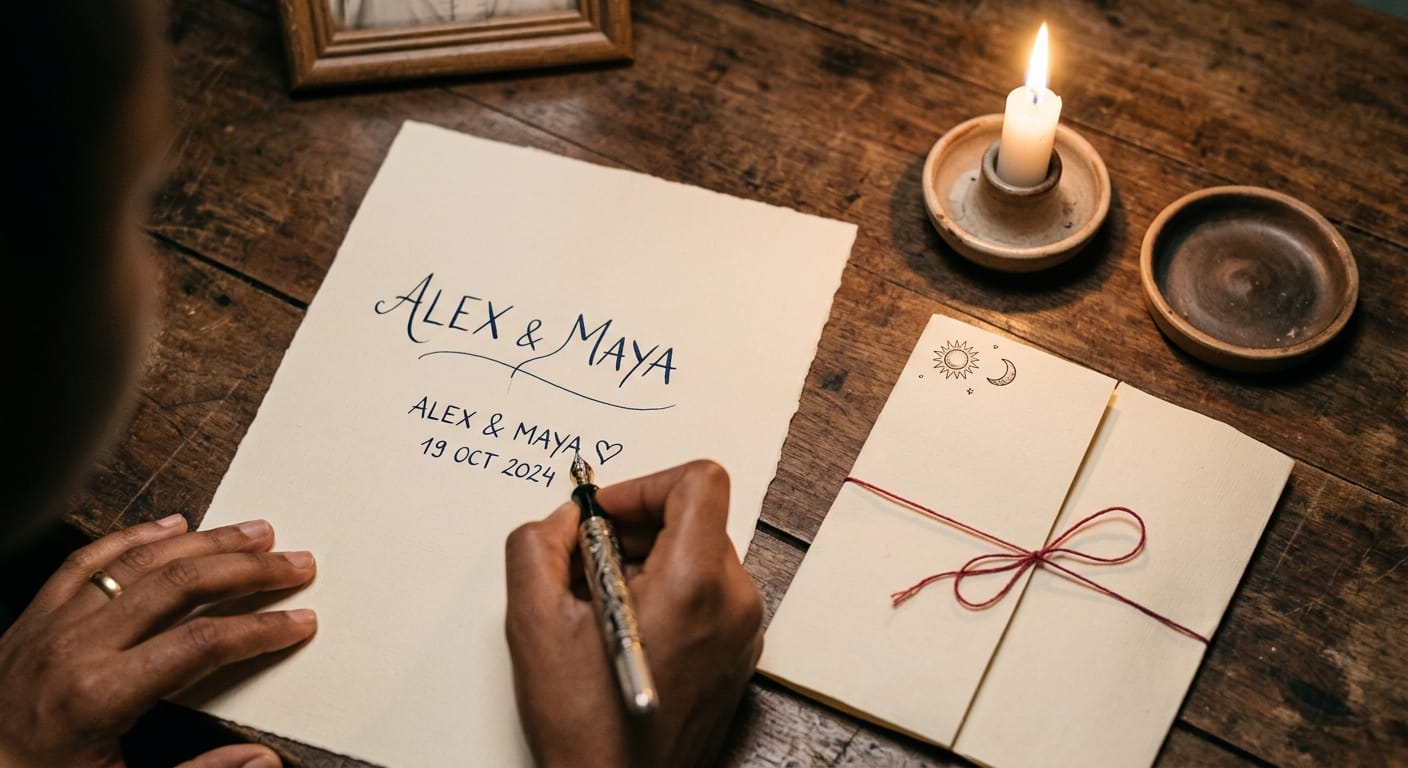
You don't have a cabinet full of candles. You don't have rose quartz, dried rose petals, or a jar of honey sitting around for a spell you saw on TikTok at midnight. What you have is a notebook, a pen that actually writes, and a feeling in your chest that won't let you sleep until you do something about it.
Contact me by WhatsappThat's genuinely enough to start with, and this page is going to walk you through exactly how, honestly, and without pretending paper and ink alone can replace real ritual training when a situation calls for more.
I've spent years around this practice, close to Priest Codanto's work out of Ketou, Benin, and one thing that comes up constantly is people assuming they need an elaborate setup before they can do anything at all. They don't. Paper and pen rituals are some of the oldest, simplest tools in spellwork generally, not because they're weak, but because writing something down is itself an act of focused intention, which is the actual engine behind any spell, elaborate or not.
Why This Search Brings So Many People to the Same Page
If you searched for love spells that work immediately with paper and pen, you're probably one of two kinds of people. Either you're genuinely broke or between paychecks and can't justify spending money on ritual supplies for something you're not even sure will work yet, or you're the kind of person who wants to try something small and honest before committing to anything bigger, spiritually or financially. Both reasons are completely valid, and neither one makes this a lesser approach compared to a more elaborate ritual involving candles, herbs, and hours of preparation.
There's actually a long history behind minimal ritual work like this, stretching across multiple folk traditions, not just one. Written petitions, letters to spirits or saints, names inscribed and folded, these show up again and again precisely because they're accessible to anyone regardless of income or access to specialty shops. What follows on this page draws specifically on how Priest Codanto frames written intention within Vodun practice, while being honest about where a simple ritual like this reaches its natural limit.
Why Paper and Pen Actually Work as a Ritual Tool
Before getting into the how, it helps to understand why this specific combination shows up across so many traditions, not just one. Writing forces clarity. You can't scribble a vague, half formed wish onto paper the way you can let one drift through your head. The physical act of choosing words, committing them to ink, and holding the paper in your hands creates a level of focus that a fuzzy mental wish never reaches.
There's also something to be said for permanence, at least temporarily. A thought passes. A written page stays put until you decide what happens to it: burned, buried, folded and kept, torn and released. That decision becomes part of the ritual itself, a second act of intention layered onto the first.
Priest Codanto's approach to Vodun treats these small, accessible rituals as real, not lesser versions of "proper" spellwork. He's said before that the spirits respond to sincerity and clarity of intention more than to an expensive shopping list. A well written page held with genuine focus carries real weight. What it can't do, and what this page won't pretend it can do, is replace the deeper, lineage specific work a trained priest performs when a situation is more tangled than a simple wish for connection.
What "Immediately" Actually Means Here
Let's be straight about the word "immediately" before going any further, because it gets used loosely all over the internet and it sets people up for disappointment. A paper and pen ritual can be performed immediately, tonight, right now if you want. What follows it, the emotional or relational shift you're hoping for, doesn't usually arrive as fast as the ritual itself.
Small, focused rituals like this tend to work best for situations that already have some real foundation: a person you're already connected to who's grown distant, a mutual attraction that hasn't been acted on yet, a relationship that needs a nudge rather than a resurrection. For those, signs sometimes show within days. For deeper, more complicated situations, a long silent ex, a relationship broken by real betrayal, feelings that were never mutual to begin with, a simple written ritual is a starting point, not a finish line, and that's worth knowing before you begin so you're not disappointed by morning.
Who This Page Is Actually For
The people searching for love spells that work immediately with paper and pen tend to fall into a few recognizable groups, and it's worth naming them because the honest advice differs slightly depending on which one you are.
There's the person who just wants to try something small before deciding whether spiritual work is even for them, testing the water rather than diving in. There's the college student or someone between jobs who genuinely doesn't have spare money for candles, herbs, or a consultation, and needs an approach that costs nothing but time and honesty. There's the skeptic who half believes and half doesn't, and figures a low stakes paper ritual is a reasonable way to find out without committing to anything bigger. And there's the person in real emotional pain over a specific situation who's simply exhausted and wants to feel like they're doing something instead of lying awake doing nothing.
All four of these are legitimate reasons to be here, and this page is written for all of them at once, honestly rather than as a funnel toward something more expensive. If a simple ritual is genuinely what your situation calls for, that's what you should do, full stop.
What You Actually Need
This is deliberately short, because the whole point of this kind of ritual is accessibility.
Your whole shopping list
- A clean sheet of paper, unlined if you have it
- A pen that writes smoothly, ideally set aside afterward
- A quiet ten or fifteen minutes without interruption
- Optional: a small fireproof dish, if your ritual calls for burning
- Optional: a single candle, lit simply for focus
A clean sheet of paper, unlined if you have it, though lined paper works fine too. A pen that writes smoothly, ideally one you'll set aside afterward and not use for ordinary tasks, since dedicating a tool to ritual use, even briefly, adds a layer of intention most people underestimate. A quiet ten or fifteen minutes where you won't be interrupted. And, if you have them, a small dish or fireproof container in case your ritual calls for burning the paper afterward, though not every version requires this.
That's genuinely it. No candles required, though a single candle nearby, lit simply for focus rather than as a mandatory ingredient, can help some people settle into the right headspace.
The 10 Rituals, Explained One by One
Jump to a ritual
1 The Basic Intention Spell
Here's a straightforward version, suitable for someone new to this and working with a situation that has real emotional ground underneath it already.
Start by sitting somewhere quiet. Take a few slow breaths, not for any mystical reason specifically, just to actually settle your mind instead of writing while distracted and half present, which weakens the intention behind every word.
On the paper, write the full name of the person you're focused on at the top. Beneath it, write your own name. Then write, in your own words rather than a copied script, what you're actually hoping for. Not a vague "make them love me," but something honest and specific: what you want to change, what you're hoping to feel, what kind of connection you're aiming to strengthen or restore. Specificity matters more than poetic phrasing. The spirits, in Priest Codanto's framing, respond to clarity, not to flowery language borrowed from a spell book.
Once it's written, read it aloud, quietly, once. This step matters more than people expect. Speaking the words after writing them adds a second layer of intention, voice added to ink.
Fold the paper toward yourself, three times, while holding a clear mental image of the outcome you're hoping for. Some traditions specify folding away from yourself for release work and toward yourself for drawing something closer, and for a love working aimed at drawing connection nearer, folding inward fits that logic.
What happens next depends on what you're doing with the paper: keep it somewhere private and meaningful, near your bed or in a drawer you open often, or burn it safely in a fireproof container while picturing the intention being released into motion rather than trapped on the page. Both approaches are used within different strands of folk and spiritual practice. Keeping the paper suits situations where you want to nurture and hold the intention close. Burning suits situations where you want to actively release it outward, sending it toward resolution rather than sitting on it.
Why it worksThis ritual works because it strips everything down to the two things that actually matter, a clear name and a clear intention, without letting extra materials or elaborate steps dilute the focus. The folding motion gives your hands something to do while your mind holds the image steady, and that combination of physical action and mental focus is what most ritual work actually relies on underneath whatever tradition it's dressed in.
Who this fitsPicture someone who's been talking to a person for weeks, plenty of good conversations, real chemistry, but nothing has moved forward because one or both of you keeps hesitating. There's no wound to heal here, no third party, no history of hurt. It's just inertia. This ritual is built exactly for that kind of stuck momentum, giving the situation the nudge it needs without trying to manufacture something that isn't already halfway there.
2 The Written Conversation Spell
This one works well for situations involving miscommunication, distance, or a connection that's gone quiet rather than one that never existed.
Instead of writing a single statement of intent, write an actual letter to the person, one you'll never send. Say everything you'd say if there were no consequences, no fear of rejection, no awkwardness standing in the way. This isn't about being polished. It's about being honest, sometimes messily so.
When you're finished, read it over once, then fold it and either keep it in a place tied to memories of the relationship, a box, a drawer, somewhere meaningful, or burn it while picturing the honesty in those words reaching the person in some form, even if the literal letter never does. Priest Codanto has described this style of ritual as particularly effective for situations rooted in miscommunication specifically, since the underlying block in those cases is often exactly what the letter addresses: things left unsaid.
Why it worksMost stalled relationships aren't stalled because feeling disappeared. They're stalled because something went unsaid at the wrong moment and both people quietly agreed, without ever discussing it, to stop bringing it up. Writing the letter you'll never send forces you to actually name that unspoken thing, at least to yourself, which clears the fog around your own understanding of the situation even before anything shifts with the other person.
Who this fitsThink of someone who had a falling out with a partner, or with someone who almost became a partner, over something that, looking back, was mostly a misunderstanding blown out of proportion by pride on both sides. Neither person has reached out first, both are waiting, and the silence has calcified into something that feels bigger than it actually is. This ritual is built for exactly that kind of standoff.
3 The Names and Thread Spell
This variation adds one additional simple material, a length of red thread or string, while still keeping the core of the ritual centered on paper and pen.
Write both names on the same sheet, connected by a simple drawn line between them. Beneath the line, write a short phrase describing the bond you're hoping to strengthen: closeness, honesty, renewed affection, whatever fits your actual situation rather than a generic phrase copied from elsewhere. Wrap the red thread loosely around the folded paper afterward, tying it once, not tightly, symbolizing connection without control or force, since the ethical line in this practice runs firmly against binding someone against their will.
Keep this one rather than burning it, tucked somewhere private, and consider it as much a symbol of ongoing intention as a one time ritual act. Some people revisit it weekly, holding it for a moment and restating the intention quietly, rather than treating it as a single closed event.
Why it worksThe thread adds a physical symbol of connection that the paper alone doesn't provide, something you can touch and feel rather than only read. Loosely wrapping rather than binding tightly is a deliberate ethical choice built into the ritual itself, a physical reminder that this is about connection, not control, every time you happen to see or hold the folded page.
Who this fitsThis suits someone in an established relationship that's functional but has started feeling a little flat, less about repair and more about deliberately reinforcing a bond that's already real but could use active tending. It also works for early dating situations where two people are clearly drawn to each other but haven't quite named what's happening yet, and a gentle, sustained intention feels more appropriate than a dramatic one time push.
4 The Mirror Writing Spell
This one adds a small twist that some people find genuinely powerful: writing your intention twice, once normally and once in mirror script, reversed letter by letter, on the same page. The logic behind it draws on the idea of seeing a situation from both sides, your own perspective and a reflected version of it, side by side on the same sheet.
Write your honest intention normally first, the same way described in the basic ritual above. Then, beneath it, attempt to write the same words in reverse, right to left, letter by letter, even imperfectly. It doesn't need to be legible or perfectly mirrored; the intention behind the attempt matters more than technical precision. Fold the page in half so the two versions face each other, then keep it somewhere private. Some people describe this version as helping them see a situation more honestly, since the effort of writing backward slows the mind down and often surfaces feelings that got rushed past in the first, faster version.
Why it worksWriting backward is deliberately difficult, and that difficulty is the point. It forces a slower, more deliberate pace than the fast, familiar motion of ordinary handwriting, which tends to surface a more honest version of what you actually feel rather than the polished version your mind reaches for automatically. Some traditions describe this kind of mirrored writing as a way of showing a situation to yourself from an angle you'd otherwise avoid looking at directly.
Who this fitsThis one suits someone who suspects they're not being fully honest with themselves about a situation, someone who keeps saying they're over it while still checking their phone every five minutes, or someone who insists they just want closure while quietly hoping for something more. The forced slowness of mirror writing has a way of cutting through that kind of self deception.
5 The Sun and Moon Spell
This one uses two small drawings alongside your written words: a simple sun and a simple moon, sketched anywhere on the page, even roughly. Write your name beside the sun and the other person's name beside the moon, or the reverse if that feels more fitting to your situation, then write your intention between the two symbols, connecting them visually with a line or a small arc. The sun and moon represent two things drawn into orbit around each other, distinct but linked. Fold the page toward yourself once finished and keep it somewhere you'll see it occasionally, a book you read often, a drawer you open daily, letting the symbol of connection stay present in your everyday life rather than sealed away.
Why it worksSun and moon imagery taps into an old, widely recognized symbol of two distinct things existing in relationship to each other without one absorbing the other, which suits love work aimed at partnership rather than fusion. Keeping the page somewhere you'll see it regularly, rather than sealing it away immediately, extends the ritual's presence into ordinary daily life instead of confining it to a single evening.
Who this fitsThis works well for two people who are genuinely different from each other, different schedules, different temperaments, different social circles, and the goal isn't to erase those differences but to help them orbit each other more smoothly. Long distance situations also respond well to this one, since the sun and moon are apart for much of any given day yet still bound in a single relationship to each other.
6 The Gratitude Anchor Spell
Unlike the others, this one starts from appreciation rather than longing, and it tends to suit situations where the relationship already exists and simply needs strengthening rather than repair or a fresh start. Write down three specific things you're genuinely grateful for about the person, real details, not generic compliments, then beneath them write your intention for the relationship going forward. Read it aloud once, fold it toward yourself, and keep it near where you sleep. Gratitude focused rituals like this one tend to work slowly and steadily rather than producing a dramatic shift, since they're reinforcing something already present rather than trying to spark something new.
Why it worksAttention grows whatever it lands on. Deliberately naming specific, real reasons for gratitude redirects your focus away from frustration or resentment that might have quietly built up, and that shift in attention tends to change how you actually show up in the relationship day to day, which in turn changes how the relationship feels from the inside for both people.
Who this fitsThis is ideal for a long term couple who love each other but have fallen into a pattern of noticing what's wrong more than what's right, the small daily friction of shared life slowly crowding out appreciation. It's less a rescue ritual and more a maintenance one, something worth returning to periodically rather than only reaching for during a crisis.
7 The Crossroads Choice Spell
This variation suits someone torn between pursuing a specific person and moving on entirely, when the real block isn't the other person's feelings but your own uncertainty. Draw a simple crossroads on the page, two lines crossing, and write the person's name at one path and "clarity" or "peace" at the other. Beneath the drawing, write honestly about what you actually want, even if the honest answer surprises you. This spell is less about drawing someone closer and more about clearing your own confusion so whatever you do next comes from clarity rather than anxious guessing. Burning this one tends to suit people well, releasing the confusion outward rather than keeping it folded in a drawer.
Why it worksA lot of stuck romantic situations aren't actually stuck because of the other person at all. They're stuck because the person doing the searching hasn't been honest with themselves about what they actually want, and that internal fog gets projected outward as confusion about the relationship itself. Naming the two paths clearly on paper forces a decision that's already been quietly avoided, often for a long time.
Who this fitsThis suits someone who's been going back and forth on an on again, off again situation for months, unsure whether to keep trying or genuinely let go, and who's more exhausted by their own indecision than by anything the other person has actually done. It's a ritual for clearing your own head first, before doing anything else about the relationship itself.
8 The Repeated Name Spell
A simpler, more repetitive approach: write the person's full name nine times down the page, and beside each instance, write one word describing what you hope to feel or see change, love, patience, honesty, closeness, whatever genuinely fits. The repetition itself builds focus, the same way repeating a prayer or mantra does across many traditions, rather than relying on a single perfectly worded sentence to carry the whole intention. Fold the page toward yourself and keep it, revisiting it if you feel called to, though not compulsively.
Why it worksRepetition is one of the oldest focusing techniques across human ritual practice, from prayer beads to chanted mantras, because the mind settles into steady attention through repeated motion rather than a single burst of concentration. Pairing each repetition with a different word keeps the exercise from becoming mechanical, so the focus stays engaged rather than drifting on autopilot by the fifth or sixth line.
Who this fitsThis suits someone who processes emotion better through steady, rhythmic action than through a single dramatic gesture, someone who'd rather write the same name nine times with real attention than compose one perfect paragraph. It also suits situations where the intention itself is fairly simple and doesn't need elaborate explanation, just sustained, repeated focus.
9 The Shared Memory Spell
This one draws on a specific, real memory rather than a general wish, and it tends to work well for reconnecting with someone after distance or a quiet stretch rather than for pursuing someone new. Write about one specific moment that mattered, in detail, what happened, how it felt, why it stuck with you. Beneath the memory, write your intention for creating something like that again. The specificity of a real memory tends to carry more emotional weight than an abstract wish, and Priest Codanto has noted that this kind of ritual often surfaces feelings the person doing it didn't fully realize were still there.
Why it worksAbstract wishes are easy to dismiss, even by the person making them, because they don't feel tethered to anything concrete. A real, specific memory carries actual emotional weight, since it happened, it was real, and recalling it in detail reconnects you to the genuine feeling underneath the wish rather than a vague, generic version of hope.
Who this fitsThis is built for reconnecting with someone you have real history with, an ex you parted from on decent terms, a friendship that drifted apart without any real falling out, a family bond that's gone quiet through distance rather than conflict. It leans on what already happened rather than trying to invent something new.
10 The Release and Renewal Spell
The final ritual in this set is meant for a very specific situation: when you've already tried other approaches, spiritual or otherwise, and you're ready to release the anxious grip on the outcome while still holding honest hope. Write down everything you've been carrying about the situation, the hope, the fear, the frustration, all of it, without editing yourself. Then write a shorter, calmer closing line stating your actual intention, simply and clearly. Burn the longer part, releasing the anxious weight of it, and keep the shorter closing line folded somewhere private. This one tends to bring a kind of emotional relief on its own, separate from whatever happens with the relationship afterward, since naming and releasing anxious energy is valuable regardless of outcome.
Why it worksAnxious, unnamed emotion tends to leak into everything it touches, into how you text, how you behave around the person, how you interpret their every small action. Writing it all out and physically releasing it through burning acknowledges that weight honestly instead of pretending it isn't there, which tends to loosen its grip even before anything shifts externally.
Who this fitsThis one is for whoever has been carrying a situation the longest, someone who's already tried a few things, spiritual or practical, and is running on emotional fumes at this point. It's less about starting fresh and more about setting down a weight you've been dragging for too long so you can actually move forward, whatever direction that ends up being.
Signs a Paper and Pen Spell Is Actually Taking Effect
People performing any of these ten rituals for the first time often ask how they'll know something is genuinely shifting rather than just hoping it is. The honest answer looks a lot like what's true of bigger, lineage trained workings too: change tends to arrive in small pieces rather than one dramatic sweep.
Watch for a message arriving out of nowhere from someone who'd gone quiet, especially one with more warmth in it than recent exchanges have had. Watch for your own mind settling, a noticeable drop in the anxious loop of checking your phone every few minutes, which often happens before anything visible shifts with the other person, since part of what these rituals do is calm the person performing them, not only influence the person they're aimed at. Watch for small openings in conversation, a question that wasn't there before, a joke that lands differently, a moment of eye contact that lingers half a second longer than it used to.
Quiet signals worth noticing
- A warmer message out of nowhere from someone who'd gone quiet
- Your own anxious phone checking settling down
- A new question or opening in conversation
- A joke that lands differently, eye contact that lingers a little longer
None of these are guarantees, and none of them arrive on command. But they're the kind of quiet, real signals worth paying attention to rather than waiting for a single dramatic turning point that these smaller rituals were never built to produce.
Enhancing Any of These Rituals With Optional Extras
None of the ten rituals above require anything beyond paper and pen, but a few small, optional additions can deepen the experience for people who want to go slightly further without abandoning the core simplicity.
A single candle, lit and placed nearby rather than used as an ingredient itself, helps some people settle into focus faster than sitting in ordinary room lighting. A specific, quiet piece of music, or no music at all, played consistently every time you perform ritual work, can train your mind to associate that sound with focused intention, making future rituals easier to sink into. A small personal object, a piece of jewelry, a photograph, held briefly before writing, can help ground scattered thoughts before you put pen to paper. None of these are required. They're small supports for people who find them genuinely helpful, not upgrades that make a ritual more powerful on their own. (If a photograph feels central to your situation, the love spell using photos page goes further into that approach.)
What Priest Codanto's Clients Say About Trying This First
Plenty of people who eventually reach out to Priest Codanto for deeper, lineage trained work started with something small like this, a paper ritual tried alone at home before ever considering a consultation. He's mentioned that this is actually a healthy pattern, not a wasted first step. Clients who've tried a simple written ritual first tend to arrive at a consultation with a clearer sense of what they actually want, having already sat with the situation honestly on paper rather than jumping straight into a request without having thought it through.
Some clients describe the simple ritual as having helped in a real, if modest way, easing some of the immediate anxiety even before any bigger shift occurred. Others found that the simple version made clear, more than anything else could have, that their situation needed something beyond what a candle and a folded page could address, which is valuable information in itself. Either outcome is a legitimate reason to have started here.
Writing Prompts If You Don't Know What to Say
Staring at a blank page with a pen in hand and nothing coming to mind is more common than people admit, especially under emotional pressure. If that happens, try answering one of these honestly, in your own words, and let the answer become the core of your written intention.
Prompts to start from
- What specifically changed between us, and when did I first notice it.
- What do I actually want to happen in the next month, stated as plainly as possible.
- What am I afraid to admit I want, even to myself.
- What would it feel like, physically and emotionally, if this situation resolved the way I'm hoping.
- What have I been avoiding saying to this person that keeps surfacing in my head at inconvenient times.
Any one of these, answered honestly, gives you more than enough material for whichever of the ten rituals fits your situation. The goal was never poetic language. It was always honesty translated into ink.
A Note on Respecting the Tradition Behind These Rituals
It's worth saying plainly that these written rituals, while simple and accessible, sit within a much older tradition than a single web page can fully convey. Vodun treats intention and petition seriously, as part of a living religious system with its own history and its own spirits, not as a lifestyle aesthetic to borrow casually and discard. Performing a paper and pen ritual at home doesn't require initiation or formal training, but approaching it with genuine respect rather than as a novelty trick matters, both practically, since sincerity is what actually powers a working, and out of basic regard for a tradition that real people, including Priest Codanto and generations before him, have practiced with real seriousness for centuries.
Timing: Does It Matter When You Do This?
People ask constantly whether there's a "right" time to perform any of these rituals, and the honest answer is that timing helps more than it strictly determines success. Within Vodun cosmology, certain days and lunar phases carry more weight for particular kinds of requests, and a working aimed at drawing something closer often benefits from being performed as the moon is waxing, growing from new toward full, since that phase is traditionally associated with increase and growth rather than release.
That said, this isn't a strict requirement for a simple paper and pen ritual the way it might be for more involved ceremonial work. If tonight is the night you feel ready, moved, and genuinely focused, that emotional readiness usually matters more than waiting three weeks for an ideal lunar phase. Priest Codanto has said plainly that sincerity performed now beats perfect timing performed half heartedly later.
What Priest Codanto Has Learned From Decades of Written Petitions
Written petition isn't a modern shortcut invented for people without access to a full ceremonial setup. Priest Codanto has pointed out that written requests to spirits have a long history within Vodun practice itself, predating any internet trend around paper and pen love spells by generations. Families in Ketou have long written specific requests on paper as part of larger ceremonies, sometimes read aloud during a ritual, sometimes placed at a shrine, sometimes kept by the person making the request as a physical reminder of what they asked for.
What's changed isn't the legitimacy of writing as ritual practice. What's changed is that people now perform simplified versions of this alone at home, without the surrounding ceremonial structure a full working would normally include. Priest Codanto doesn't consider that a corruption of the practice. He's described it more as the accessible edge of something much larger, a doorway rather than a diluted copy. Someone who writes an honest, focused intention on paper tonight is doing a smaller version of something real people have done for a very long time, not inventing a shortcut with no roots behind it.
He's also noted a pattern worth mentioning here: people who approach a simple written ritual with real seriousness, treating it as meaningful rather than as a game or an experiment, tend to describe more noticeable results than people who try it half heartedly as a joke or a dare. That's consistent with everything else in this practice. The materials scale up or down depending on the situation, but sincerity is the one ingredient that never becomes optional at any scale.
What to Do if You Don't Have Paper or a Pen Handy
Occasionally someone reaches out having done this ritual with whatever was actually available: the back of a receipt, a torn notebook page, a pencil instead of a pen. None of that weakens the ritual. What matters is the intention behind the act, not the specific stationery. A love spell written on paper and pen doesn't require anything from a specialty shop. It requires honesty and focus, which cost nothing and are available to literally anyone reading this right now, wherever they are.
Common Mistakes People Make With This Kind of Spell
Writing Something Vague
"I want them to love me" is too broad to focus real intention around. What does love actually look like in this specific situation? More texts? A real conversation about what went wrong? Physical closeness restored? The more specific the written intention, the more the ritual actually has to work with.
Trying to Force Feeling That Isn't There
This is worth repeating from every other page on this topic, because it's the single most important ethical boundary in the whole practice. A paper ritual, like any spellwork, works with what's genuinely present between two people. It can clear obstacles and encourage openness. It cannot manufacture feeling in someone who has none, and rituals attempted with that goal specifically tend to produce murky, unstable results rather than the outcome hoped for.
Doing It While Distracted
Scribbling words while half watching television or replying to texts undercuts the entire mechanism. The ritual's power comes from focused intention, and focus is exactly what's missing when it's performed as an afterthought squeezed between other things.
Repeating It Obsessively
Performing the same ritual every single night out of anxious hope rather than genuine renewed intention tends to dilute rather than strengthen it. Once, done well and with real focus, generally does more than the same words rushed through nightly out of desperation.
Expecting an Overnight Transformation
Covered above already, but worth restating here specifically because it's the mistake that causes the most disappointment. A written ritual plants something. It doesn't guarantee a bloom by morning.
Common Myths About Paper and Pen Love Spells, Cleared Up
Myth: Writing something down and burning it guarantees results within days
Burning has symbolic weight, releasing intention outward rather than holding it close, but it isn't a countdown timer. Some situations shift within days because the underlying connection was already strong and just needed a nudge. Others take weeks because there's more standing in the way than a single ritual addresses. The burning itself doesn't set the clock; the actual situation does.
Myth: The words have to rhyme or sound like a traditional spell
Rhyming incantations exist across plenty of traditions, but for a simple written ritual like this, honest, specific language works better than borrowed poetic phrasing that doesn't actually reflect what you want. Sincerity reads more clearly to whatever you're petitioning than a rhyme scheme copied from a website.
Myth: You need to be a practicing witch or priest for this to count as real magic
Simple written intention rituals have always belonged to ordinary people, not exclusively to trained practitioners. What separates a casual wish from an actual working is focus, honesty, and the deliberate structure of writing it down and doing something with the paper afterward, not a title or years of formal training.
Myth: If you feel silly doing it, that means it won't work
Feeling a little self conscious the first time is completely normal, especially for anyone who's never done anything like this before. That discomfort fades with practice and doesn't cancel out the sincerity underneath it. What actually undermines a ritual is going through the motions distractedly, not feeling a bit awkward while genuinely trying.
Myth: Doing this wrong can curse you or backfire badly
A simple love focused written ritual, performed with honest, non manipulative intention, carries very little risk of any kind of backfire. The situations where things go sideways tend to involve attempts to force feeling that isn't there or intentions rooted in control rather than genuine connection, not an accidentally misspelled name or an imperfectly folded page.
Myth: A more elaborate version with more materials will always outperform paper and pen alone
More elaborate rituals exist because certain situations genuinely call for more precision and more specific spiritual tools, not because complexity itself adds power. For a situation that actually fits what these ten rituals are built for, adding candles, herbs, and additional steps you don't fully understand doesn't make the ritual stronger. It often just adds distraction. Match the tool to the situation rather than assuming more is automatically better.
Myth: If you can find the "correct" wording online, the spell becomes guaranteed
Plenty of sites sell the idea that a specific memorized script, recited word for word, is what makes a spell work. That's backwards. A borrowed script recited without real personal investment tends to carry less weight than an imperfect, honestly worded sentence that actually reflects your specific situation. Sincerity beats scripted phrasing every time in this kind of work.
Common Questions About Doing This With a Partner Rather Than Alone
A slightly different situation worth addressing separately: some people reading this aren't pursuing someone new or trying to win someone back. They're already together and want to perform a ritual as a couple, jointly, rather than one person doing it alone on the other's behalf.
This is entirely possible and, when both people are genuinely willing, can deepen the ritual's meaning considerably. Sit together, each write your own honest intention on separate pages rather than one shared page, since each person's honest wording matters and shouldn't be diluted into a joint statement neither person fully means. Read your intentions to each other afterward if you're both comfortable with that level of vulnerability, or keep them private even from each other if that feels more appropriate. Fold both pages together with the red thread from the third ritual described earlier, symbolizing two individual intentions bound into one shared commitment, and keep the folded pair somewhere meaningful to you both.
This version doesn't work if one partner is doing it enthusiastically while the other is going through the motions out of obligation. Genuine mutual willingness is the entire point, and forcing a partner into ritual participation they don't actually want undermines the same ethical principle that runs through every other ritual on this page: real connection can be strengthened, not manufactured.
Real Situations This Kind of Ritual Tends to Help With
It helps to picture actual situations rather than abstractions, since the phrase "love spell" covers a huge range of circumstances that don't all call for the same approach.
Someone who had a good first date that seemed to fizzle out through nothing more dramatic than bad timing and busy schedules is a strong candidate for this kind of ritual, since there's already a spark, just buried under logistics. Someone whose partner has grown quieter and more distant over the past few weeks, without any specific blowup or betrayal behind it, often benefits from the written letter version described earlier, since the block there is usually communication, not absence of feeling. Someone hoping to smooth things over after a small argument that got blown out of proportion is another strong fit, since the underlying bond is intact and just needs the tension cleared.
Where this kind of ritual tends to struggle is anywhere real hurt, betrayal, or a third person has entered the picture. Those situations have more layers than a single evening with paper and pen can realistically untangle, and pretending otherwise sets people up for disappointment rather than helping them.
A few more specific scenarios worth naming, since they come up constantly. Someone reconnecting with a college friend they lost touch with, wondering whether there was always something more there, tends to do well with the shared memory spell, since the history is real and the feelings are usually mutual even if unspoken. Someone who's newly single and not sure whether they're ready to open up to someone new tends to benefit more from the crossroads choice spell than any of the connection focused rituals, since the real work there is internal clarity first. Someone in a long term relationship going through a rough patch after a big life change, a move, a new job, a new baby, tends to respond well to the gratitude anchor spell, since the bond itself is intact and just needs deliberate tending during a stressful stretch.
And one scenario worth naming honestly because it comes up often: someone hoping to win back an ex who left specifically because of repeated broken trust, lying, or a pattern of hurtful behavior that hasn't actually changed. This is exactly the kind of situation where a simple written ritual, however sincere, isn't going to address the real problem, because the real problem isn't a lack of connection or communication, it's a lack of demonstrated change. No honest page on this topic should pretend a folded piece of paper fixes that. Real change on the part of the person who caused the hurt has to happen first, and that happens through action in the world, not through ritual alone.
When a Paper and Pen Ritual Isn't Enough
Here's the honest part of this page, the part a lot of sites skip because it doesn't help them sell anything else. Simple written rituals genuinely help with situations that have real, present emotional ground and just need a nudge, clarity, or a gentle opening. They're not built for deeper, more tangled situations: a relationship broken by real betrayal, feelings that involve a third party, a long silence stretching over years, or a situation where something more is actively working against the connection, jealousy from someone else, a pattern of miscommunication that's calcified over time.
Signs you need more than paper and pen
- A relationship broken by real betrayal
- Feelings that involve a third party
- A long silence stretching over years
- Something actively working against the connection, like jealousy from someone else
- A pattern that has repeated despite your best efforts
For those, Priest Codanto's lineage trained work draws on specific spirits, materials, and protocols passed down over decades, the kind of judgment that comes from having read hundreds of situations, not from a single evening with a notebook. That's not a sales pitch tacked onto a DIY guide. It's an honest distinction between what a simple ritual is built for and what it isn't, made clearly so you're not left disappointed after doing everything right on your end and still finding a bigger obstacle underneath.
What Priest Codanto Says About Small Rituals Versus Bigger Workings
I asked him directly, once, whether a simple written ritual like this actually counts as real spiritual work or whether it's just a starter exercise to keep hopeful people busy while they build up the nerve to reach out for something bigger. His answer was more generous than I expected. He said intention is intention, and a person who sits down honestly with paper and pen, focused and sincere, is doing something real, not play acting at magic. What changes with a bigger, lineage trained working isn't the sincerity involved, it's the precision: knowing exactly which spirit to petition for a specific kind of block, knowing which materials pair with which situation, knowing how to read a case that's more tangled than it first appears.
He compared it to the difference between a home cooked meal made with real care and a meal prepared by someone who's spent decades learning a specific cuisine. Both can genuinely nourish someone. One draws on a depth of trained knowledge the other simply hasn't had the years to build yet. Neither is fake. They're just different in scale and precision, and knowing which one a situation actually calls for is half the work of getting a real result.
How to Know Which of the 10 You Need
A useful gut check: if the situation is mostly about timing, distance, or a nudge toward openness with someone you already have a real connection to, one of these ten rituals is a solid, honest starting point. Reconnecting after distance suits the written conversation spell or the shared memory spell. Strengthening something already healthy suits the gratitude anchor spell. Sorting out your own confusion before acting suits the crossroads choice spell. Drawing someone closer with steady, repeated focus suits the repeated name spell or the names and thread spell.
Quick match
| Your situation | Start with |
|---|---|
| Real chemistry, but stuck momentum | 1. Basic Intention |
| Reconnecting after distance or silence | 2. Written Conversation or 9. Shared Memory |
| Strengthening something already healthy | 6. Gratitude Anchor |
| Unsure what you actually want | 7. Crossroads Choice |
| Drawing someone closer with steady focus | 8. Repeated Name or 3. Names and Thread |
| Carrying a situation for too long | 10. Release and Renewal |
If the situation involves real hurt, a third person, a long stretch of silence, or a pattern that's repeated itself more than once despite your best efforts, that's usually a sign the underlying block is more complicated than any of these ten can clear on their own, and reaching out for guidance makes more sense than repeating the same simple ritual and hoping harder each time.
Building a Simple Aftercare Habit Once the Ritual Is Done
Something that gets skipped on most pages about this topic: what to actually do in the days after performing one of these rituals, beyond simply waiting. Aftercare, in the sense used here, isn't a mystical add on. It's practical emotional management, and it matters because the waiting period is often the hardest part of the whole process.
Avoid checking your phone every few minutes hoping for a sign, since that anxious loop tends to make the wait feel longer and heavier than it needs to. Give yourself something else to focus on in the days following the ritual, work, a hobby, time with friends, anything that isn't obsessively monitoring the situation for movement. If you find yourself wanting to repeat the ritual daily out of anxiety, that's a sign to pause rather than push harder, since repetition driven by anxiety tends to work against the calm, focused intention the ritual actually needs.
Keep a small note of when you performed the ritual and what, if anything, shifted in the days and weeks after. Not out of superstition, but because it's genuinely useful information if you ever decide a bigger, more tailored approach is needed. Being able to say clearly what you tried, when, and what happened afterward gives a trained practitioner like Priest Codanto something concrete to work from rather than a vague, anxious retelling months later.
Tried it, and the situation needs more?
Tell Priest Codanto what you tried and what happened. The first conversation costs you nothing but honesty about where things actually stand.
Message +229 56 94 95 65 on WhatsAppFrequently Asked Questions
Do I need any special paper or pen for this to work?
No. Ordinary paper and any working pen are enough. What matters is your focus while writing, not the material quality of the tools themselves.
Should I burn the paper or keep it?
Both approaches are used depending on intention. Burning suits situations where you want to release the intention outward, actively sending it toward resolution. Keeping the paper suits situations where you want to nurture and hold the intention close over time. Either is valid; choose based on what your specific situation calls for.
Can this work on someone who doesn't know I have feelings for them?
Yes, though the honest expectation should shift slightly. Without an existing emotional connection to work with, the ritual leans more toward opening a path for genuine connection to form naturally rather than manufacturing feeling that isn't there yet.
Is it dangerous to do this myself without a trained priest?
Not physically, and not spiritually in any dramatic sense either. Simple written rituals focused on love and connection carry low risk. The bigger risk is disappointment if the ritual is aimed at a situation more complicated than paper and pen were built to handle.
How many times should I repeat the ritual?
Once, performed with real focus, tends to do more than repeating it nightly out of anxious hope. If you feel called to revisit it, a slower pace, weekly rather than daily, keeps the intention meaningful rather than diluted.
What if I feel nothing while doing the ritual?
That's more common than people admit, especially the first time. Focus is a practiced skill, not something everyone drops into instantly. Take a few extra slow breaths beforehand next time, and don't judge the ritual's effectiveness by how dramatic it felt performing it.
Can I combine this with a candle even though it's supposed to be paper and pen only?
Yes, a single candle lit for focus doesn't compromise the simplicity of this kind of ritual. The paper and pen remain the core act; a candle just supports the atmosphere around it.
What's the difference between this and a full ritual performed by Priest Codanto?
Scale and depth, mainly. A paper and pen ritual draws on your own focused intention alone. Priest Codanto's work draws on decades of training, specific spirit relationships, and materials suited to a case after real conversation about the actual situation, which matters more as a situation gets more complicated.
Should I tell the other person I did this ritual?
That's a personal choice, not a requirement either way. Some people find it meaningful to be honest about it later if things move in a good direction. Others prefer to keep it private. Neither choice affects how the ritual itself functions.
What if the ritual doesn't seem to be working after a week or two?
Reassess honestly rather than repeating it blindly. Ask whether the situation might have more underneath it than a simple written wish can address: a third party, deeper hurt, or a pattern that's repeated before. If so, that's a sign to reach out for a more tailored approach rather than assuming the ritual itself failed.
Can I write the ritual on my phone or does it have to be physical paper?
Physical paper matters here more than it might seem. Typing lacks the same embodied, deliberate quality that handwriting carries, the slower pace, the physical motion of forming each word, the tactile decision of what to do with the page afterward. A note on your phone can be a helpful place to draft your thoughts first, but the actual ritual works better performed on real paper with a real pen in hand.
Is there a specific color of ink that works best?
There's no strict requirement, though some people find meaning in choosing red or pink ink specifically for love work, since those colors carry traditional associations with romance and warmth across many folk practices. Black or blue ink works perfectly well too if that's what you have. The color is a personal touch, not a mechanical requirement for the ritual to function.
Should I do this alone or can someone else be present?
Alone is generally better for this kind of ritual. The intention being written is deeply personal, and having someone else present, even someone supportive, tends to pull focus away from the honest, private headspace the ritual works best from. Save sharing the experience, if you want to share it at all, for after it's done.
What if I make a mistake while writing, do I need to start over?
Not necessarily. A crossed out word or an imperfect sentence doesn't undo the sincerity behind the ritual. What matters is that the overall intention is honest and clear by the time you finish, not that every single word landed perfectly on the first attempt. If a mistake genuinely bothers you and breaks your focus, starting fresh on a new page is fine, but it's not a strict requirement.
Can this kind of ritual be used to strengthen a relationship rather than start one or fix a problem?
Absolutely, and this is actually one of the gentler, lower stakes uses for this kind of ritual. Writing an intention focused on deepening trust, communication, or closeness in an already healthy relationship works well with the same basic structure, adjusted to reflect gratitude and reinforcement rather than repair or a fresh start.
Which of the ten rituals is the strongest one?
None of them is inherently stronger than the others; they're built for different situations rather than ranked by power. The basic intention spell is a strong general starting point if you're unsure which one fits, but "strongest" isn't really the right lens for thinking about these. The right question is which one actually matches what's going on in your specific situation.
Can I use more than one of these ten rituals for the same situation?
Yes, though spacing them out rather than performing several in the same sitting tends to work better. Doing the basic intention spell one week and the gratitude anchor spell the next, for instance, lets each one land with its own focus rather than blurring together into a single overloaded ritual.
Do I need to believe in Vodun specifically for these to work?
Sincerity of intention matters more than a specific belief system. That said, understanding the framework these rituals come from, Vodun cosmology and the way it treats petition and intention, tends to deepen how meaningful the practice feels, even for someone who isn't formally part of the tradition.
What if the person I'm focused on is already in a relationship with someone else?
This is worth addressing directly rather than dodging. These simple rituals aren't built to target or dissolve someone else's existing relationship, and using them that way edges toward manipulation rather than genuine connection work. If your situation involves someone already committed elsewhere, that's a more complicated ethical and practical situation than paper and pen were designed for, and it's worth reaching out for a real conversation about the specifics rather than assuming a home ritual is the right tool.
Can teenagers or very young adults safely try these rituals?
There's nothing physically dangerous about any of the ten rituals described here, but emotional maturity matters more than age for approaching this kind of work with the right mindset, patience, honesty, and realistic expectations rather than desperation. A thoughtful teenager can absolutely try the basic intention spell. An adult approaching it anxiously and obsessively won't get more out of it just by virtue of being older.
How is this different from just journaling about my feelings?
There's real overlap, and that's not a coincidence. Journaling and ritual writing share the same underlying mechanism, clarity through the act of writing. What sets a ritual apart is the deliberate structure around it: choosing a specific intention, performing a physical closing act like folding or burning, and treating the moment with focused seriousness rather than as an open ended stream of thought. Journaling can certainly become ritual if approached that way.
Can I perform one of these rituals for a friend or family member instead of a romantic interest?
The core mechanics translate reasonably well, focused written intention, a clear name, an honest description of what you're hoping for, though the framing shifts naturally toward whatever kind of closeness or healing fits a platonic or family bond rather than romantic language. The underlying principle stays the same either way: real intention working with a genuine, existing relationship rather than manufacturing something from nothing.
Do I need to say anything specific out loud, or is silent writing enough?
Silent writing alone still carries real weight, so don't feel like the ritual fails without a spoken component. That said, reading your written intention aloud once, even quietly, adds a second sensory layer to the ritual, voice alongside ink, which many people find deepens their own focus and sense of having genuinely done something rather than just thought about it.
What should I do with the paper if I move house or the situation resolves?
If you kept a page rather than burning it and the situation eventually resolves, however it resolves, it's reasonable to close the ritual out deliberately rather than letting the paper simply get lost in a move. Burning it at that point, with a brief acknowledgment of how things turned out, gives the whole process a clear ending rather than leaving it hanging indefinitely in a drawer.
Putting Pen to Paper Tonight
If you're going to try one of these ten rituals tonight, do it slowly and honestly rather than rushing through it to feel like you've taken action. Sit with the paper, write something true rather than something borrowed, and let the ritual be what it actually is: a focused, sincere act of intention, not a magic trick with a guaranteed punchline.
If the situation turns out to need more than paper and ink can carry, that's not a failure on your part. It just means the block sitting between you and what you want is bigger than a single evening's ritual, and that's exactly the kind of situation Priest Codanto has spent decades working through with people.
There's no shame in either outcome. Plenty of people who try one of these ten rituals find exactly what they needed, a nudge, some clarity, an opening that widens into something real over the following weeks. Others discover, honestly and without judgment, that their situation has more underneath it than paper and pen were ever built to address, and that discovery is valuable too, since it points toward the kind of help that will actually move things forward instead of another month of hoping a folded page will do more than it's capable of.
Love spells that work immediately with paper and pen are a real, honest starting point, not a lesser substitute for deeper work, and knowing the difference is what actually helps you get where you're trying to go. Whichever of the ten fits your situation tonight, do it slowly, do it honestly, and pay attention to what it tells you about what you actually need next. He takes consultations directly through WhatsApp at +229 56 94 95 65, or through the contact page, and the first conversation costs you nothing but honesty about where things actually stand.