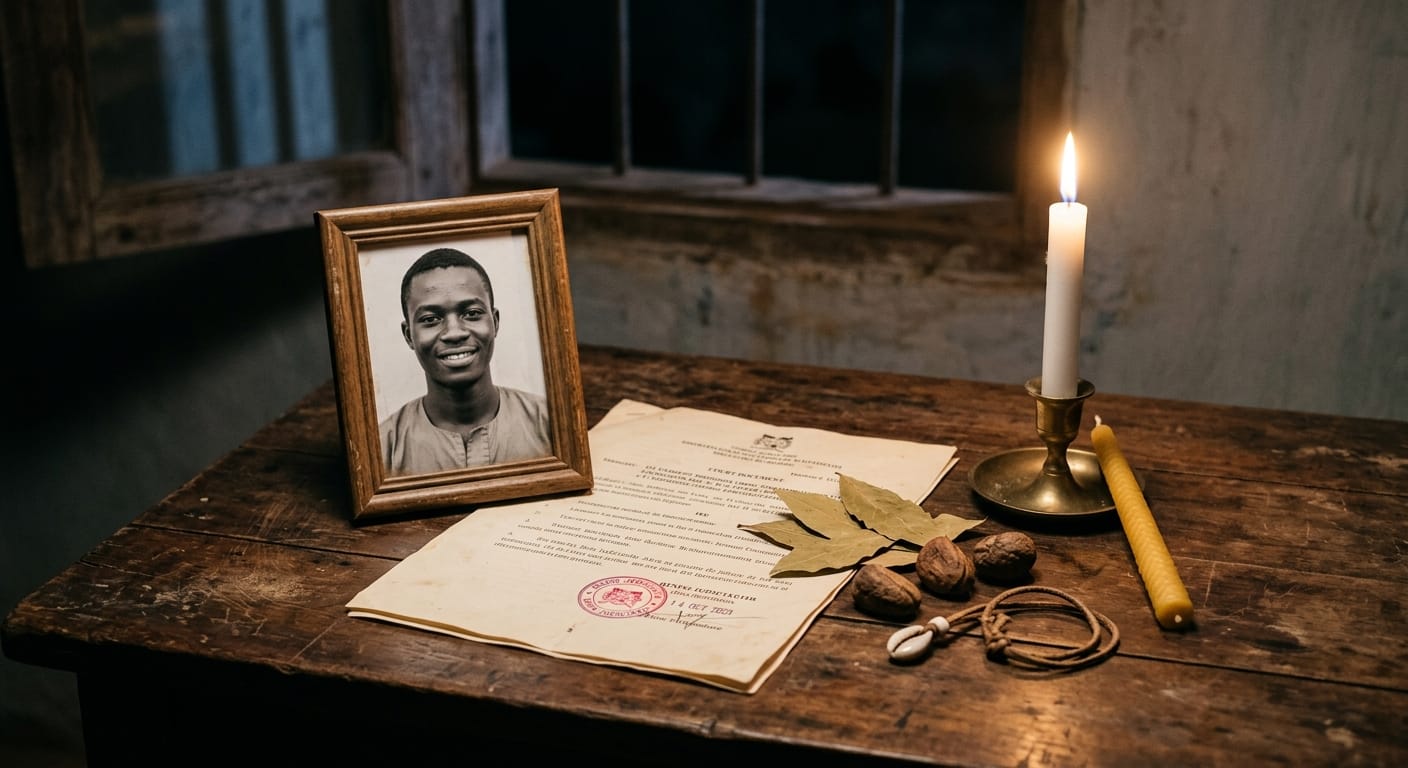
If someone you love is sitting in a cell right now, you're not reading this out of curiosity. You're reading it at 3am with your phone brightness turned all the way down so you don't wake anyone up, searching for a powerful spell to get someone out of jail because the lawyer hasn't called back, the bail amount feels impossible, and praying alone in your room stopped feeling like enough hours ago.
Contact me by WhatsappI'm not going to waste your time with vague promises. What follows is a straight look at what this kind of spiritual work can realistically do, how it's actually performed within the Vodun tradition, and what Priest Codanto has learned after decades of sitting with families in exactly this situation. Some of it will be hopeful. Some of it will be more grounded than you expected from a page like this. Both things can be true at once.
What a "Powerful Spell to Get Someone Out of Jail" Actually Means
Let's clear up the phrase itself first, because it gets misread constantly. A spell in this context isn't a mechanism for breaking locks or bribing a guard. Nobody credible is offering that, and if a site promises literal jailbreak magic, that's your first sign to close the tab. What a legitimate ritual aims at is something different and, honestly, more useful: clearing the spiritual and circumstantial obstacles standing between your loved one and a fair, faster outcome.
That can look like softening a judge's disposition toward leniency. It can look like nudging a witness toward telling the truth instead of staying silent out of fear. It can look like clearing away the bad luck that seems to follow some cases, the missed paperwork, the postponed hearings, the public defender who's stretched too thin to notice a detail that actually matters. Priest Codanto describes it as removing static from the signal, the same way he talks about love work. The ritual doesn't manufacture innocence where there's guilt, and it doesn't override a judge's free will entirely. It clears the path so that whatever is true and fair has room to actually happen.
Who Reaches Out for This Kind of Help
It's worth saying plainly that the people writing in about this aren't a narrow group. Mothers reach out about sons who got caught up in something that started small and spiraled. Wives reach out about husbands facing charges tied to a bad decision made under financial pressure. Adult children reach out about aging parents caught in situations that feel absurd given a lifetime of otherwise lawful living. Siblings reach out for each other. Occasionally someone reaches out for themselves, quietly, before a hearing they're dreading, without telling anyone else in the family they've done it.
What ties these people together isn't a shared background or a shared kind of case. It's the particular flavor of helplessness that comes from watching someone you love get swallowed by a system that doesn't move at the speed of your fear, and not knowing what else to do with your hands while you wait. Priest Codanto has said that this, more than the specifics of any charge, is usually the real thing he's addressing in the first conversation: not just the case, but the exhausted person on the other end of WhatsApp who hasn't slept properly in days.
Why People Turn to Spiritual Work When the Legal System Feels Stuck
Anyone who's dealt with the justice system in the United States, or frankly anywhere, knows how slow and impersonal it can feel from the outside. You call the courthouse and get a recording. Your public defender has forty other cases. Bail is set at a number that might as well be a million dollars if you don't have it, and every day that passes feels like another day your loved one is forgotten in a system built to process people, not understand them.
Vodun offers something the legal system rarely does: a sense of agency. You're not just waiting anymore. You're doing something, and that something is rooted in a tradition going back centuries, one that treats justice, protection, and the untangling of bad fortune as domains spirits can actually be petitioned about. Priest Codanto has worked from Ketou, Benin since 1980, and cases involving incarceration, wrongful accusation, and unfair sentencing have come to him consistently over those decades, not as a rare specialty but as one of the more common reasons families reach out.
How This Kind of Ritual Actually Works
There's no single universal ritual for every jail situation, because no two cases are alike. A first time, low level charge with a sympathetic judge calls for different work than a serious charge with a hostile prosecutor pushing for the maximum sentence. That said, there's a general shape to how Priest Codanto approaches these cases, and walking through it honestly is more useful than pretending there's a magic formula.
The four stages of the work
- An honest conversation about the person and the case
- Choosing which spirits the case calls on
- Timing the working around a hearing or bail review
- Pairing the ritual with real world legal action
First comes the conversation. He needs the real details: the person's name, a photograph if you have one, what they're actually charged with, where the case stands, what the family's biggest fear is. Vague or softened accounts make it much harder to shape a ritual that fits the actual situation, so honesty here matters more than almost anywhere else in this process.
Second, he identifies which spirits the case calls on. Some workings lean on spirits associated with justice and truth telling. Others draw on protective spirits meant to shield someone from harm while they're inside, which matters just as much as getting them out, since jail itself carries real physical and emotional risk. Materials commonly used include specific herbs, candles chosen by color and intention, kola nuts, and small amulets meant to be carried or kept near the accused if at all possible, sometimes through a visit, sometimes symbolically when direct contact isn't allowed.
Third, timing matters. Certain days and lunar phases carry more weight for justice related petitions within Vodun cosmology, and Priest Codanto will often plan the working around an upcoming hearing date or bail review rather than performing it randomly.
Fourth, and this is the part people skip when they're desperate: the ritual is paired with real world action. Prayer and paperwork aren't in competition. A spell to soften a judge's disposition works alongside a competent lawyer, not instead of one. Priest Codanto is direct about this with every client. If you haven't secured proper legal representation, that's the first phone call to make, not the last.
How Priest Codanto Reads a Legal Case Before Choosing a Ritual
People sometimes imagine that a priest just lights a candle and recites something, and that's the whole process. It isn't, and pretending otherwise would undersell how much judgment actually goes into a working like this. Before anything is performed, Priest Codanto spends real time understanding the shape of the case, not just the charge on paper but the human situation underneath it. The same approach applies to any legal matter, as described on the court case spells that work fast page.
He asks about the relationship between the accused and any alleged victim, since a case involving strangers reads very differently from one involving family conflict or a relationship gone wrong. He asks about the accused person's history with the law, whether this is a first encounter or part of a longer pattern, since that shapes both the legal reality and the kind of spiritual support that makes sense. He asks who else is involved: a codefendant, a key witness, an aggressive prosecutor known for pushing maximum sentences, a judge with a reputation one way or another in that jurisdiction. None of this is idle curiosity. Each detail changes which spirits are petitioned, which materials get used, and how the ritual itself is shaped.
This is also where families sometimes get uncomfortable, because being asked pointed questions about a loved one's past or the specifics of an allegation isn't pleasant. Priest Codanto has said more than once that he'd rather ask an uncomfortable question upfront than shape a working around an incomplete picture and watch it fail to land because it was aimed at the wrong problem entirely.
The Difference Between Release Work and Protection Work
Two distinct kinds of ritual work often run alongside each other in these cases, and understanding the difference matters. Release work aims outward, at the legal machinery itself: the judge, the hearing schedule, the paperwork, the prosecutor's disposition. Protection work aims inward, at the person sitting in a cell, shielding them from the real dangers that exist inside any jail or detention facility, dangers that have nothing to do with the legal case itself.
Release work
Aims outward, at the legal machinery: the judge, the hearing schedule, the paperwork, the prosecutor's disposition.
Protection work
Aims inward, at the person in the cell: keeping them safe, steady, and less vulnerable while the case unfolds.
Families sometimes focus entirely on getting their loved one out and forget that the weeks or months spent waiting matter just as much. A protective working, often involving specific herbs and a photograph kept by the family as a focal point, is aimed at keeping the person safe, steady, and less vulnerable to the kind of violence, despair, or mistreatment that can happen behind bars regardless of how the case eventually resolves. Priest Codanto treats this as inseparable from the release work itself, not an optional addition. Getting someone out into a version of themselves that's been ground down by months of fear isn't really a full win. (For more on this side of the practice, see the page on voodoo protection spells.)
Signs This Spiritual Work Is Actually Landing
Families ask constantly how they'll know if anything is happening, especially in the anxious stretch between the ritual and the next court date. The honest answer is that results here tend to look like small shifts in the machinery of the case rather than one dramatic moment. A hearing that gets moved up instead of pushed back. A prosecutor who suddenly seems open to a plea deal that wasn't on the table last week. A public defender who calls back for the first time in a month with something useful to say. A witness statement that changes in a way that helps rather than hurts.
Small shifts worth watching for
- A hearing moved up instead of pushed back
- A prosecutor suddenly open to a plea deal
- A public defender calling back with something useful
- A witness statement changing in a way that helps
None of these are guaranteed, and none of them happen on command. But they're the kind of signals Priest Codanto tells families to watch for rather than expecting handcuffs to simply fall away at midnight, which isn't how this works and isn't how he's ever claimed it works.
Is It Wrong to Use a Spell When Someone Might Actually Be Guilty?
This question comes up more than you'd think, usually asked in a lowered voice, like the person is confessing something. Here's the honest answer. Priest Codanto doesn't ask families to prove innocence before he'll help. He asks about the situation, the relationship, and what the family genuinely wants, which is very often not "let them escape consequences entirely" but "let this be handled fairly, without excessive punishment, without a system that grinds someone down more than the offense actually warrants."
There's a real difference between wanting justice bent to hide wrongdoing and wanting a fair, proportionate process for someone who's already suffering the consequences of a mistake. The ritual work leans toward the second aim. If someone did something seriously harmful to another person, that's not the kind of situation this tradition treats lightly, and a practitioner worth trusting will tell you that directly rather than promising to erase consequences regardless of what happened.
What Materials Are Typically Used
Every case is shaped individually, but common elements in a justice and release focused working include candles in specific colors, often white for clarity and protection or yellow for justice and quick resolution, along with herbs like bay leaf, known across many traditions for legal and court related work, and specific roots and amulets tied to Vodun practice specifically. A photograph of the person is often used as a focal point, the same way it's used in reconnection rituals, since the principle is the same: direct, sustained intention toward a specific person and situation rather than a vague wish sent into the air.
Nothing here involves anything illegal, dangerous, or capable of being smuggled into a facility against the rules. If a site is telling you to sneak an object into a jail or attempt anything that violates facility policy, that's not spiritual practice, that's a bad idea dressed up as one, and it can genuinely hurt your loved one's case rather than help it.
How Long Does It Typically Take?
This is the question every family asks first, and the honest answer disappoints people who want a number they can circle on a calendar. Cases tied to a specific upcoming hearing sometimes show movement within one to two weeks, especially when the working is timed intentionally around that date. More complex cases, ones involving serious charges, multiple hearings, or a slow moving court calendar, can take longer, sometimes stretching across the full length of a legal process that was already going to take months regardless of any spiritual work involved.
Anyone guaranteeing release within 24 or 48 hours across the board is not being honest with you, whatever tradition they claim to represent. Legal processes have their own mechanical pace, court dates get set weeks or months out no matter what, and no ritual short circuits a calendar the courthouse itself controls.
Common Situations Families Bring to This Kind of Work
A Loved One Awaiting Bail Review
This is probably the single most common scenario. Someone's been arrested, bail has been set at an amount the family can't reach, and the immediate goal is a bail reduction or a faster review date. Ritual work here often focuses on the judge presiding over the review and on clearing whatever bureaucratic snags are slowing the paperwork down.
A Case Awaiting Trial With No Clear Timeline
Some cases sit in limbo for months, with hearings pushed back repeatedly and no real sense of when things will move. Families in this situation often feel the most helpless, since there's no single event to focus energy toward. Priest Codanto typically recommends an initial working aimed at simply getting the case moving again, clearing whatever administrative fog is causing the delay, before targeting a more specific outcome.
A Sentencing Hearing Coming Up
Once guilt or a plea has already been established, the goal shifts from release to proportionality, working toward the most fair and lenient sentence reasonably available given the circumstances, rather than trying to undo an outcome that's already been legally settled.
A Wrongful Accusation
These cases carry a different emotional weight entirely, and Priest Codanto treats them with particular seriousness. When a family is certain the accused person didn't do what they're charged with, the ritual work often leans harder into truth revealing petitions, aimed at surfacing whatever evidence, testimony, or overlooked detail might clear things up, alongside protective work to keep the accused safe and steady through what can be a genuinely traumatic ordeal.
A Teenager or Young Adult's First Arrest
These cases carry their own particular weight. A parent reaching out about a son or daughter's first real brush with the law is often dealing with a mix of fear, guilt, and a desperate need to keep one mistake from defining the rest of that young person's life. Priest Codanto approaches these with an emphasis on proportionality and a longer view: not just clearing the immediate legal obstacle, but supporting a path where this doesn't become the first entry in a much longer pattern. Judges and prosecutors often have real discretion with younger, first time defendants, and ritual work here frequently focuses on encouraging that discretion to bend toward rehabilitation rather than maximum punishment.
A Repeat Offense Where Trust Has Run Out
Harder cases involve someone who's been through the system before, where a judge, a family, or a community has grown weary of repeated promises to do better. These situations call for a more honest reckoning before any ritual is performed. Priest Codanto will often ask the family directly whether they believe real change is possible this time, because a working aimed at release without any accompanying shift in circumstances tends to produce the same outcome down the road. Spiritual work isn't a substitute for the harder, slower work of actually changing a pattern, and pretending it is would be doing the family a disservice.
Immigration Detention
A growing number of families reaching out are dealing with detention tied to immigration status rather than a criminal charge. The legal mechanics differ significantly from a criminal case, and Priest Codanto is upfront that spiritual work here supports the process, easing anxiety, clearing bureaucratic obstacles, supporting a fair hearing, but doesn't replace the need for a qualified immigration attorney, which matters even more in these cases given how technical that area of law has become. This is covered in depth in the protection spell against immigration issues guide.
Common Myths About Jail Release Spells, Cleared Up
Myth: A powerful enough spell can make charges disappear entirely
This is the myth that causes the most harm, because families sometimes delay hiring a lawyer or entering a plea negotiation while waiting for a ritual to make the whole legal problem vanish. Charges are dropped through legal processes, insufficient evidence, prosecutorial discretion, a successful motion, not through spiritual intervention alone. What ritual work can do is support the conditions under which a fair legal outcome, including a genuinely deserved dismissal, becomes more likely. It doesn't replace the legal mechanism itself.
Myth: The more you pay, the more powerful the spell
Cost has nothing to do with spiritual efficacy, and any practitioner implying otherwise is exploiting a family's fear rather than helping them. Materials cost what they cost. Time and complexity vary by case. A five figure fee doesn't buy a stronger working than a modest one; it usually just buys a more expensive marketing operation.
Myth: Only a spell performed inside the jail itself can work
Distance has never been the obstacle people assume it is. Priest Codanto's clients are almost entirely outside Benin, and the ritual work happens on his end in Ketou regardless of where the accused is being held. A photograph, a name, and an honest account of the case are what the working actually needs, not physical proximity to a cell.
Myth: If it doesn't work immediately, it failed
Legal cases move on their own calendar, and a working timed around a hearing three weeks out isn't going to show visible results the next morning. Judging a ritual's effectiveness by the following day's silence, rather than by what actually unfolds around the next scheduled court date, sets families up to give up on something that may still be working exactly as intended.
Myth: This kind of work is only for people who are innocent
Plenty of families reaching out aren't claiming innocence at all. They're asking for fairness, for a sentence that matches what actually happened rather than the maximum the law technically allows, for a process that treats their loved one as a person rather than a case number. That's a legitimate and common reason to seek this kind of support, and it doesn't require anyone to insist on innocence they don't believe in.
What Families Wish They'd Known Sooner
Talking to enough families over the years, certain regrets come up again and again, and sharing them here might save someone reading this at 3am some of that same pain. Many wish they'd reached out for spiritual support earlier instead of waiting until the case felt hopeless, since ritual work paired with an early legal strategy tends to have more room to unfold than a last minute effort squeezed in before a final hearing. Many wish they'd been more honest about the full situation from the start rather than presenting a softened version out of embarrassment or fear of judgment, since the softened version is what shapes a less accurate ritual. And many wish they'd kept better records of court dates, filings, and conversations with the lawyer, since a practitioner working alongside your legal strategy needs the same information your attorney does to actually help in a coordinated way rather than in isolation.
What to Have Ready Before You Reach Out
A few things make the first conversation more productive and let Priest Codanto shape the right working faster. Have the person's full name and, if possible, a recent photograph. Know the actual charge, not a vague description, since the specific charge shapes what kind of legal and spiritual approach makes sense. Know the court dates if any have been set. And be ready to talk honestly about the situation, including the parts that are uncomfortable, since incomplete information leads to a ritual that's aimed at the wrong target.
Before your first message
- The person's full name and, if possible, a recent photograph
- The actual charge, not a vague description
- Any court dates that have been set
- Your lawyer's or public defender's latest update
- Readiness to talk honestly, including the uncomfortable parts
What This Work Cannot Do
Fairness matters more here than almost anywhere else on this site, so let's be direct. This kind of ritual cannot erase a genuine crime that caused real harm to another person. It cannot bribe or corrupt an official, and no legitimate practitioner would frame it that way even privately. It cannot override the actual evidence in a case or manufacture a not guilty verdict out of clear guilt. And it cannot replace competent legal counsel, ever, under any circumstance. Priest Codanto has turned away requests that crossed these lines, not because the tradition lacks power, but because using it that way isn't what it's for, and pretending otherwise would be dishonest to the people trusting him with something this serious.
What this work cannot do
- Erase a genuine crime that caused real harm to another person
- Bribe or corrupt an official
- Override the actual evidence or manufacture a not guilty verdict
- Replace competent legal counsel, ever
What it can do is clear obstacles, support the people involved through an enormously stressful process, and give a fair case the best possible spiritual conditions to unfold the way it should.
How to Know If a Practitioner Offering This Work Is Legitimate
The warning signs here are the same ones that show up across every corner of this industry, but they matter even more when someone's freedom is on the line. Watch for guaranteed release within an impossibly short window. Watch for pressure to pay before any real conversation about the actual case. Watch for costs that keep climbing once you're already emotionally invested, a pattern some sites lean on specifically because desperate families are less likely to walk away mid process. Watch for anyone suggesting anything that sounds like bribery, smuggling, or interfering with facility rules, since that's not spiritual work, that's a legal liability being disguised as one.
Red flags to watch for
- Guaranteed release within an impossibly short window
- Pressure to pay before any real conversation about the case
- Costs that keep climbing once you're emotionally invested
- Anything that sounds like bribery, smuggling, or breaking facility rules
A legitimate practitioner will ask real questions about the case, give you a realistic sense of timing rather than a guarantee, and will tell you plainly, the way Priest Codanto does, that spiritual work supports a legal strategy, it doesn't substitute for one. For a longer checklist, see how to find a real voodoo priest.
Lawyer first. Then add spiritual support.
Tell Priest Codanto the truth about the situation. No charge just to explain your case, and he'll tell you honestly what spiritual work can and can't do for it.
Message +229 56 94 95 65 on WhatsAppFrequently Asked Questions
Can a spell literally get someone physically released from a jail cell?
Not in the sense of doors opening on their own. What it aims at is influencing the legal process itself, judges, hearings, evidence, timing, so that a fair outcome arrives faster and more smoothly than it might otherwise.
Does this work for any charge, no matter how serious?
The tradition doesn't refuse to help based on the charge alone, but the kind of outcome sought shifts depending on severity. For serious charges involving real harm to another person, the aim leans toward fairness and proportionality rather than full release regardless of guilt.
How much does this kind of ritual cost?
There's no fixed price, since every case calls for different materials and a different amount of work depending on complexity. Cost is discussed honestly after Priest Codanto understands the actual situation.
Can I do a version of this myself while waiting to reach a priest?
A simple candle ritual focused on clarity and protection for your loved one is something you can do respectfully on your own while you wait, though the deeper, lineage specific work that targets the legal process directly is something trained practitioners handle for good reason. It's less about gatekeeping and more about the years of study behind reading a case correctly.
Will this replace the need for a lawyer?
No, and any practitioner telling you otherwise isn't being honest with you. This kind of spiritual work is meant to run alongside solid legal representation, not instead of it. If your loved one doesn't have a lawyer yet, that's the first call to make.
How quickly should I expect to see any change?
Cases tied to a specific upcoming hearing sometimes show movement within one to two weeks. More complex or multi hearing cases can take considerably longer, since the legal calendar itself sets a pace no ritual can fully override.
Do I need to be in Benin or visit in person?
No. Consultations happen through WhatsApp, phone, or email. The ritual is performed on the practitioner's end in Ketou regardless of where the accused is being held.
Can this kind of spell help with a family member's immigration bond specifically?
Yes, immigration bond hearings are treated similarly to criminal bail reviews in terms of the spiritual approach, aimed at supporting a fair, timely hearing and a reasonable bond amount, though the legal mechanics differ enough that a qualified immigration attorney remains essential alongside any spiritual work.
Is there a difference between working with Priest Codanto and reciting a spell I found online myself?
The materials might look similar on the surface, a candle, a name written on paper, an herb or two, but the difference is in the judgment behind how they're used. A DIY ritual applies a generic template to a specific, complicated legal situation. Priest Codanto's work is shaped around the actual details of the case after real conversation, drawing on decades of pattern recognition from having handled hundreds of situations like it. That difference tends to show up in results more than in the visible materials themselves.
What if the case involves multiple defendants and I only care about one of them?
This comes up more than people expect, especially in cases where several people were arrested together but only one is a loved one you're trying to help. The ritual work can be focused specifically on one individual within a shared case, though Priest Codanto will usually ask about the full situation anyway, since what happens to codefendants often affects the case as a whole, including plea negotiations and witness cooperation that can shift the outcome for everyone involved.
Does the accused person need to know a ritual is being performed on their behalf?
It isn't required, and many families choose not to mention it, especially early on, to avoid adding stress to someone already under enormous pressure. That said, when it's possible to let the accused know they have spiritual support behind them, many families find it brings real comfort during an isolating and frightening stretch of time, separate from whatever legal movement eventually follows.
Can a spell help speed up a slow moving public defender's office?
Indirectly, yes. Much of what people describe as "the system moving slowly" comes down to overworked public defenders juggling far too many cases at once. Ritual work aimed at clearing bureaucratic fog and drawing attention to a case that's been sitting untouched can sometimes coincide with a public defender suddenly finding time to review a file that had been buried under a stack of others. It's not a guarantee, but families have reported exactly this pattern often enough that Priest Codanto treats it as a real, if unpredictable, effect worth working toward.
If You're Reading This at 3am, Here's What to Do Next
Take a breath. You're not powerless in this, even though it feels that way right now. Get the lawyer situation sorted first if it isn't already, that part cannot wait. Then, when you're ready to add spiritual support to the legal process rather than instead of it, Priest Codanto has spent decades sitting with families through exactly this kind of night. He works with clients across the United States, Canada, and Europe entirely through WhatsApp, so distance from Ketou isn't an obstacle to getting help started tonight.
You can reach him directly through WhatsApp at +229 56 94 95 65, or through the contact page. Tell him the truth about the situation. That's always where a powerful spell to get someone out of jail actually starts, not with a candle lit alone in the dark, but with an honest conversation about who your loved one is and what they actually need.